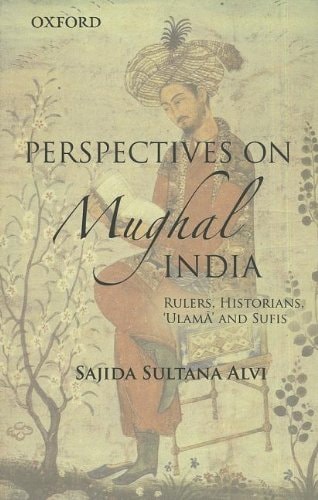
Perspectives on Mughal India: Rulers, Historians, 'Ulma and Sufis
0
0
As an Amazon Associate and affiliate partner, Menrva Books earns from qualifying purchases. Learn more
Author Description
This collection aims to demonstrate that rigorous historical analysis should lead to a better understanding of socio-political developments in their respective historical contexts. Beginning with an overview of the expansion of Islam in the Indo-Pakistan subcontinent, it goes on to discover the pearls of wisdom on the art of governance through a perceptive study of historical works and didactic literature, and Islamic "Mirrors for Princes." It then introduces the reader to the spiritual life of the Naqshbandi Sufis and provides glimpses of their lives, as they lived. Against the backdrop of political crises and social disorder during the later period of Mughal rule, it adeptly portrays the role of Naqshbandi Sufis and 'ulama' in spearheading the revitalization and genuine understanding of the practices of Islam. The ascendancy of Shi'ism in Emperor Jahangir's administration (1606-1627), is amply demonstrated in an account of the rise of Baqir Najm-i Sani, a Shi'i émigré from Iran to India - a man of sword and pen - who rose to become a powerful noble in Jahangir's administration (1605-1627). Over hundred years later, as the Mughal Empire declined, sectarian squabbles between Shi'is and Sunnis are succinctly captured in an analysis of the discourses of Naqshbandi Sufis and Sunni 'ulama's.
Menrva's Summary
THE THESIS
This collection investigates the complex interplay between political governance, religious authority, and social stability during the Mughal period in India. Author Sajida Sultana Alvi utilizes a combination of historical chronicles, didactic literature, and primary source documents to examine how the Naqshbandi Sufis and the 'ulama' navigated the shifting political landscape of the empire. By analyzing the rise of specific administrative figures and the evolution of sectarian discourse, the work argues that religious and political spheres were deeply intertwined in the maintenance of Mughal authority.
THE SCOPE MAP
What You Will Find
- Analysis of Islamic "Mirrors for Princes" and their influence on the art of governance.
- Historical examination of the Naqshbandi Sufi order and their role in social and religious revitalization.
- Case studies on the rise of Shi'i officials within the administration of Emperor Jahangir.
- Documentation of sectarian tensions between Shi'i and Sunni groups during the decline of the Mughal Empire.
THE AUTHORITY PERSPECTIVE
Scholars and historians recognize this work as a valuable contribution to the study of religious and political dynamics in early modern India. Readers frequently note the academic density of the prose, which provides a rigorous examination of primary sources for those interested in the intellectual history of the Mughal era.
Page Count:
277
Publication Date:
2012-09-29
Publisher:
Oxford University Press
ISBN-10:
0195476433
ISBN-13:
9780195476439
History
Sufism
Asian History
Mughal Empire
Islamic Studies
Community Tags
Similar Books