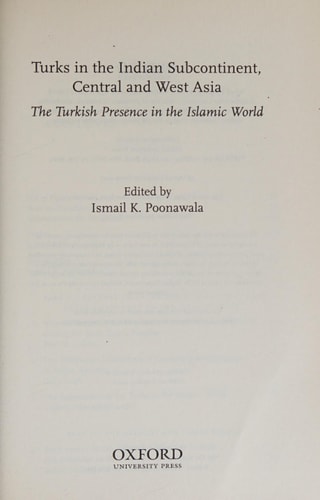
Turks in the Indian Subcontinent, Central and West Asia: The Turkish Presence in the Islamic World
0
0
As an Amazon Associate and affiliate partner, Menrva Books earns from qualifying purchases. Learn more
Author Description
For almost a millennium until the beginning of the twentieth century, Turkish rulers and military commanders controlled vast stretches of Islamic lands. While these rulers dominated lands far and wide-from Algeria in the west to Bengal in the east, reaching up to the Volga region in the north and Yemen in the south-Turkish scholars, theologians, jurists, poets, and other literary figures significantly influenced the Islamic world and its culture.Highlighting the political and cultural history of the Turks-not only within the context of the Indian subcontinent, where they laid the foundation of one of the world's biggest empires in the form of the Mughal Empire, but also within the context of Central and West Asia-this outstanding work of collective scholarship moves beyond conventional frames of reference and reassesses the contribution of Turks in the shaping of the Islamic world and its civilization.With contributions from some of the most noted scholars on Islamic history, the essays in this volume throw light on neglected themes such as the cultural changes among the Turks and their emergence in the Islamic world; their contributions in the fields of cartography and geography; Seljuq architecture and educational system; and the rise of the Safavids and the role of the Turks in the success of their military campaigns.
Menrva's Summary
THE THESIS
This volume investigates the multifaceted influence of Turkish peoples on the political, cultural, and intellectual development of the Islamic world across a millennium. Edited by Ismail K. H. Poonawala, the work compiles essays from prominent scholars to re-evaluate the Turkish presence from the Indian subcontinent to Central and West Asia. By moving beyond traditional historiographical frameworks, the contributors analyze how Turkish rulers, scholars, and military figures shaped the trajectory of Islamic civilization.
THE SCOPE MAP
What You Will Find
- Historical analysis of Turkish influence from Algeria to Bengal and the Volga region.
- Examination of Turkish contributions to cartography, geography, and educational systems.
- Studies on Seljuq architectural developments and the rise of the Safavid dynasty.
- Scholarly essays detailing the transition of Turkish groups into the Islamic cultural sphere.
THE AUTHORITY PERSPECTIVE
Experts recognize this volume as a significant contribution to the study of Islamic history, particularly for its focus on neglected cultural and intellectual themes. Scholars frequently cite the collection for its breadth and its success in synthesizing diverse regional histories into a cohesive narrative of Turkish impact.
Page Count:
416
Publication Date:
2017-02-17
Publisher:
Oxford University Press
ISBN-10:
0198092202
ISBN-13:
9780198092209
History
Military History
Asia history
Asian History
Islamic Studies
Cultural History
Islam
Community Tags
Similar Books