Kingdom of This World
0
0
As an Amazon Associate and affiliate partner, Menrva Books earns from qualifying purchases. Learn more
Author Description
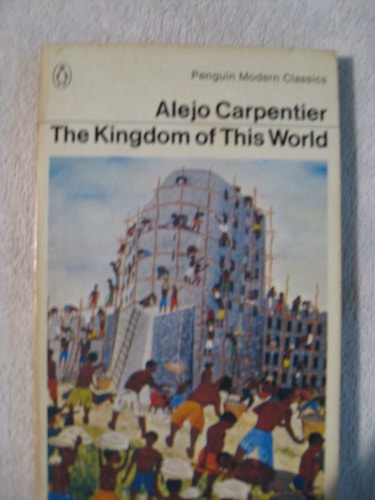
A few years after its liberation from the brutality of French colonial rule in 1803, Haiti endured a period of even greater brutality under the reign of King Henri-Christophe, who was born a slave in Grenada but rose to become the first black king in the Western Hemisphere. In prose of often dreamlike coloration and intensity, Alejo Carpentier records the destruction of the black regime—built on the same corruption and contempt for human life that brought down the French while embodying the same hollow grandeur of false elegance, attained only through slave labor—in an orgy of voodoo, race hatred, madness, and erotomania.
Menrva's Summary
THE PULSE
The narrative follows the shifting power dynamics in Haiti as the nation transitions from French colonial rule to the autocratic reign of King Henri-Christophe. Ti Noel, a slave who witnesses the cycles of revolution and oppression, serves as the primary observer of these historical upheavals. The narrative framework utilizes a non-linear, mythic approach to history, emphasizing the tension between the aspirations of the oppressed and the inevitable corruption of those who seize power. The world is defined by the brutal physical realities of plantation life and the psychological weight of voodoo traditions that permeate the cultural landscape.
INSIDE THE PAGES
- Exploration of the cyclical nature of historical power
- Integration of voodoo mythology into political reality
- Vivid, sensory-rich prose style
- Examination of the transition from colonial rule to indigenous autocracy
- Focus on the perspective of the marginalized observer
- Critique of the hollow grandeur of monarchical structures
- Use of dreamlike imagery to depict historical trauma
- Contrast between human ambition and the indifference of nature
THE COLLECTIVE ECHO
Readers and critics frequently describe this work as a foundational text for the development of the 'lo real maravilloso' or marvelous reality style. Discussion often centers on how the author balances historical accuracy with a surreal, almost hallucinatory atmosphere that reflects the volatility of the Haitian revolution. Many highlight the effectiveness of the protagonist's perspective in grounding the grand, often chaotic political shifts in a human experience. The prose is noted for its density and intensity, which some readers find challenging but ultimately rewarding for its depth. Scholars often emphasize the book's critique of power structures that merely replicate the brutality they sought to replace.
Page Count:
120
Publication Date:
1975-01-01
Publisher:
Penguin Books
ISBN-10:
0140038736
ISBN-13:
9780140038736
Historical Fiction
Post-Colonial
Political fiction
Latin American
Community Tags
Similar Books