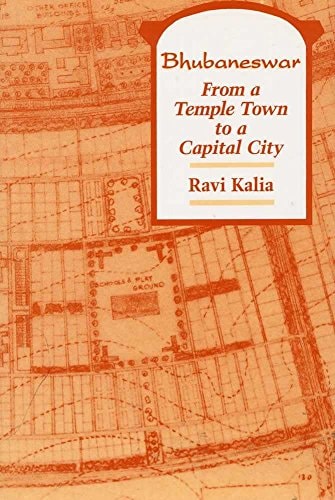
Bhubaneswar: From a Temple Town to a Capital City
0
0
As an Amazon Associate and affiliate partner, Menrva Books earns from qualifying purchases. Learn more
Author Description
In this informative new book, Ravi Kalia continues his examination of the planning of Indian cities begun with his earlier study of Chandigarh. Here, Kalia makes systematic inquiries into the political circumstances that brought about modern Bhubaneswar, the capital of the state of Orissa, to reveal the historical and social circumstances that shaped the city. In this account, Kalia brilliantly shows the interplay of indigenous religious forces, regional loyalty, and Western secular ideas in the context of twentieth-century international architecture and planning movements. This book will prove invaluable to historians, architects, planners, sociologists, and scholars interested in India, as well as those interested in urban planning in developing countries.
Menrva's Summary
THE THESIS
This book investigates the political, social, and architectural evolution of Bhubaneswar, examining how the city transitioned from a traditional temple town into a modern state capital. Ravi Kalia, an expert in urban planning and Indian history, utilizes a comparative framework to analyze the intersection of indigenous religious heritage and Western secular planning ideologies. By drawing on historical records and architectural analysis, the author demonstrates how regional identity and international design movements converged to shape the contemporary urban landscape of Orissa.
THE SCOPE MAP
What You Will Find
- Historical analysis of the political circumstances surrounding the creation of modern Bhubaneswar.
- Examination of the interplay between indigenous religious forces and Western secular planning.
- Comparative insights linking Bhubaneswar to broader trends in Indian urban development, including the author's previous study of Chandigarh.
- Evaluation of twentieth-century international architecture and its application in developing nations.
THE AUTHORITY PERSPECTIVE
Scholars and urban planners frequently cite this work as a significant contribution to the study of post-colonial Indian urbanism. Experts highlight the text for its systematic approach to documenting the complex social and political forces that define modern city planning in developing regions.
Page Count:
258
Publication Date:
1995-01-01
Publisher:
OUP India
ISBN-10:
0195636341
ISBN-13:
9780195636345
History
Politics
Architecture
Sociology
India
Rural
urban planning
Community Tags
Similar Books