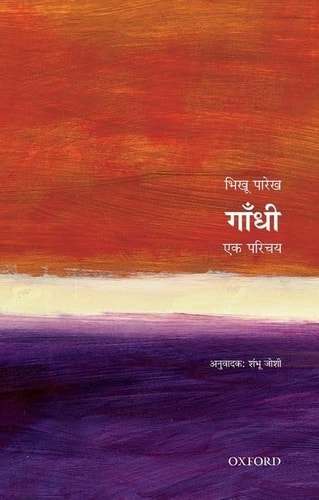
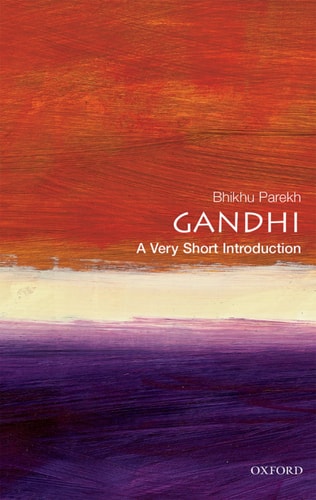
Gandhi: A Very Short Introduction
0
0
As an Amazon Associate and affiliate partner, Menrva Books earns from qualifying purchases. Learn more
Author Description
Gandhi (1869-1948) was one of the few men in history to fight simultaneously on moral, religious, political, social, economic, and cultural fronts. During his time as a lawyer in South Africa he developed his strategy of non-violence: the idea of opposing unjust laws by non-violent protest, which he made the basis of his successful struggle against British rule in India.In this Very Short Introduction to Gandhi's life and thought, Bhikhu Parekh outlines both Gandhi's major philosophical insights and the limitations of his thought. He looks at Gandhi's cosmocentric anthropology, his spiritual view of politics, his unique form of liberal communitarianism, and his theories of oppression, non-violent action, and active citizenship. He also considers how the success of Gandhi's principles was limited by his lack of coherent theories of evil, and of state and power, and how his hostility to modern civilization impeded his appreciation of its complexity.Gandhi's life and thought has had an enormous impact both within and outside India, and he continues to be widely revered, as one of the greatest moral and political leaders of the twentieth century.
Menrva's Summary
THE THESIS
This work investigates the core philosophical and political framework of Mahatma Gandhi to determine how his principles of non-violence functioned within the context of twentieth-century social and political change. Bhikhu Parekh, a noted political theorist, utilizes a concise analytical approach to evaluate Gandhi's life. He examines the intersection of Gandhi's spiritual beliefs with his practical political strategies, assessing both the efficacy of his methods and the inherent limitations of his worldview.
THE SCOPE MAP
What You Will Find
- An analysis of Gandhi's cosmocentric anthropology and liberal communitarianism.
- A breakdown of his theories regarding oppression, active citizenship, and non-violent protest.
- A critical evaluation of his stance on modern civilization and state power.
Scope Limits
- The text does not provide a comprehensive chronological biography of Gandhi's entire life.
- It does not offer an exhaustive historical account of the Indian independence movement.
THE AUTHORITY PERSPECTIVE
Experts frequently cite this work as a foundational, high-density introduction for students of political philosophy. Readers note that the text provides a balanced, critical assessment that avoids hagiography while maintaining academic rigor.
Page Count:
216
Publication Date:
2021-02-10
Publisher:
Oxford University Press
ISBN-10:
0190121076
ISBN-13:
9780190121075
Biography
History
Philosophy
Asia history
India
Community Tags
Other Editions(4)

Similar Books