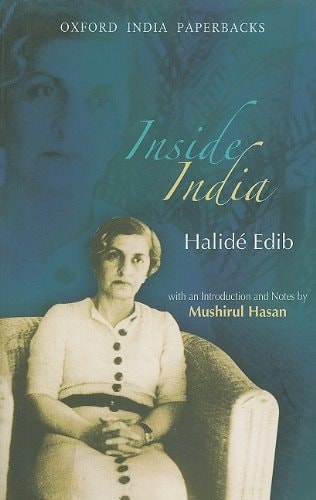
Inside India
0
0
As an Amazon Associate and affiliate partner, Menrva Books earns from qualifying purchases. Learn more
Author Description
First published in 1937, this magisterial account of India in the 1930s contains the impressions and thoughts of Halide Edib, a Turkish writer who was not interested in imagining, inscribing or inventing India, but rather in documenting its multifaceted personality. Edib's idea of India was firmly anchored in the historical and sociological insights she gained during her stay in the subcontinent, and especially through her meetings with Mahatma Gandhi and other leading figures of the nationalist movement. In this book, she sums up aspects of Indian nationalism, pointing to its strengths and weaknesses, and highlights its encounters with British colonialism. She perceives the idea of pan Islamism with skepticism, and believes that religious identity cannot be defined in isolation since it is also determined by the confluence of cultural ideas and beliefs. In India, for instance, common ideals of citizenship and culture allow a distinct sense of nationhood to exist in separation from the religious lives of its people. An overarching and scholarly Introduction by Mushirul Hasan--supported by two maps, a chronology of events, a genealogy of the Ottoman sultans, and brief biographical notes--allows for a complete reading of the text.
Menrva's Summary
THE THESIS
This work investigates the complex socio-political landscape of 1930s India through the analytical lens of an external observer. Halidé Edib, a prominent Turkish intellectual and nationalist, utilizes her extensive travels and high-level meetings with figures such as Mahatma Gandhi to construct a critical assessment of the Indian nationalist movement. By examining the intersection of British colonial policy, religious identity, and emerging citizenship, she argues that Indian nationhood is a multifaceted construct that transcends simple religious categorization.
THE SCOPE MAP
What You Will Find
- A detailed historical account of the Indian nationalist movement during the 1930s.
- Comparative analysis between Turkish reformist ideals and Indian political developments.
- Primary source observations derived from personal interviews with key political leaders.
- Scholarly supplementary materials including maps, chronologies, and biographical notes provided by Mushirul Hasan.
THE AUTHORITY PERSPECTIVE
Scholars and historians frequently cite this text as a unique cross-cultural document that offers an outsider's perspective on the complexities of the Indian independence movement. The inclusion of an introduction by Mushirul Hasan is widely considered essential for providing the necessary historical context to fully interpret Edib's observations.
Page Count:
272
Publication Date:
2008-01-01
Publisher:
OUP India
ISBN-10:
0195699998
ISBN-13:
9780195699999
Biography
History
India - History
India
Nationalism
Travelogue
Community Tags
Similar Books