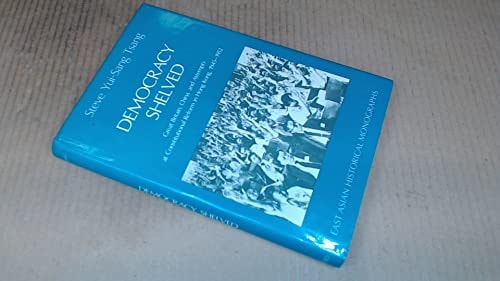
Democracy Shelved: Great Britain, China, and Attempts at Constitutional Reform in Hong Kong, 1945-1952
0
0
As an Amazon Associate and affiliate partner, Menrva Books earns from qualifying purchases. Learn more
Author Description
Between 1945 and 1952, the British government considered granting Hong Kong the right to elected self-government, but in 1952 the proposal was withdrawn. This study examines the genesis, development, and eventual abandonment of reform proposals for Hong Kong in the context of postwar Britishcolonial policy and the changing political situation in Southeast Asia.
Menrva's Summary
THE THESIS
This work investigates why the British government abandoned plans for democratic constitutional reform in Hong Kong during the critical post-World War II period between 1945 and 1952. Author Steve Yui-sang Tsang utilizes archival records and colonial policy documents to reconstruct the decision-making processes within the British administration. The book argues that the shift in geopolitical priorities, particularly the rise of the People's Republic of China and the broader instability in Southeast Asia, forced a reversal of the initial commitment to self-government. By analyzing the interplay between local colonial governance and international diplomatic pressures, Tsang provides a comprehensive account of the missed opportunity for democratic transition in the territory.
THE SCOPE MAP
What You Will Find
- Detailed analysis of the Young Plan and subsequent constitutional reform proposals.
- Examination of British colonial policy shifts in the immediate aftermath of World War II.
- Primary source evidence from British government archives and colonial office correspondence.
- Contextual study of the impact of the Chinese Communist Revolution on Hong Kong's political trajectory.
THE AUTHORITY PERSPECTIVE
Historians and political scientists recognize this text as a foundational study for understanding the political history of colonial Hong Kong. Readers frequently note the academic density of the prose and the meticulous use of primary source documentation to support the author's historical arguments.
Page Count:
292
Publication Date:
1988-07-14
Publisher:
Oxford University Press
ISBN-10:
0195841751
ISBN-13:
9780195841756
History
British History
Constitutional Law
Representative government and representation
Asian History
Community Tags
Similar Books