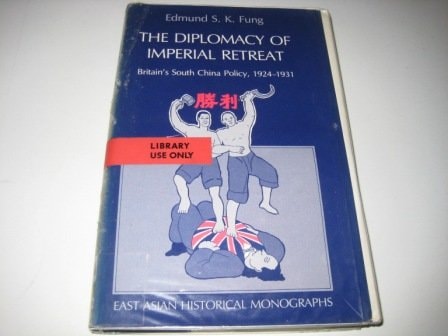
The Diplomacy of Imperial Retreat: Britain's South China Policy, 1924-1931
0
0
As an Amazon Associate and affiliate partner, Menrva Books earns from qualifying purchases. Learn more
Author Description
Confronted by Chinese nationalism and the rise of the revolutionary movement in South China, Britain commenced a retreat motivated by political, commercial, and economic considerations and aimed at the protection of British interests without reliance on gunboat diplomacy. This book analyzes British policy-making, diplomatic, military, and commercial, against the background of civil strife and political instability in China, and, in the wider sphere, of greater international cooperation. In a closely argued study based on expansive use of British and Chinese sources, Fung presents a balanced picture of this important chapter in the history of Sino-British relations.
Menrva's Summary
THE THESIS
This book investigates how British foreign policy shifted from traditional gunboat diplomacy to a strategy of managed retreat in response to the rise of Chinese nationalism between 1924 and 1931. Edmund S. K. Fung, a scholar specializing in modern Chinese history, utilizes a comprehensive array of primary documents from both British and Chinese archives. He argues that Britain's policy was a pragmatic reaction to political instability and civil strife, designed to safeguard commercial and economic interests through international cooperation rather than military force.
THE SCOPE MAP
What You Will Find
- Analysis of British diplomatic, military, and commercial decision-making processes.
- Examination of the impact of the Chinese revolutionary movement on foreign policy.
- Utilization of primary source materials from both British and Chinese government archives.
- Evaluation of the transition from imperial dominance to international cooperation in South China.
THE AUTHORITY PERSPECTIVE
Historians and scholars of East Asian relations recognize this work as a rigorous, evidence-based examination of a pivotal era in Sino-British diplomacy. Readers frequently note the academic density of the prose and the author's success in providing a balanced, multi-perspective account of imperial policy.
Page Count:
324
Publication Date:
1991-07-18
Publisher:
Oxford University Press
ISBN-10:
0195852842
ISBN-13:
9780195852844
History
Diplomacy
China
British History
Asian History
International relations
Community Tags
Similar Books