Principles of Faith
0
0
As an Amazon Associate and affiliate partner, Menrva Books earns from qualifying purchases. Learn more
Author Description
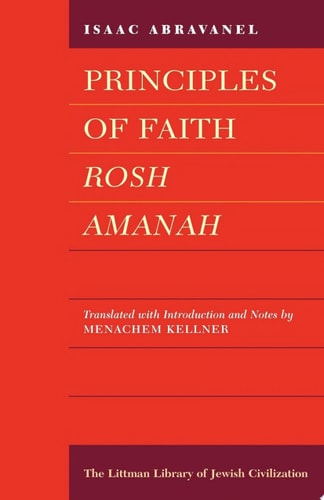
Moses Maimonides was the first medieval Jewish thinker to posit a set of dogmas for Judaism, his ‘Thirteen Principles of Faith’. His statement initiated an extensive discussion among other medieval Jewish thinkers on the subject of dogma, which had an important impact on subsequent Jewish thought. The reaction to Maimonides’ innovation was complex: some scholars accepted his position without reservation; others accepted the idea that Jewish beliefs could be reduced to a creed but disagreed with Maimonides’ formulation; still others rejected the project of creed formulation in Judaism altogether. The locus classicus of this last position is the Rosh Amanah of Isaac Abranavel (1437–1508).Abravanel’s ostensible aim in writing Rosh Amanah was to defend Maimonides’ creed from the attacks of its critics, notably Hasdai Crescas and Joseph Albo, and it contains the most exhaustive and systematic analysis of the Thirteen Principles ever written. After twenty-two chapters of sustained and zealous defence of Maimonides, however, Abravanel seems to contradict himself, arguing at the end of his book that in fact Judaism has no dogmas whatsoever and that all its beliefs are equally valid, fundamental, and precious.This is the first complete English translation of Abravanel’s classic work, and includes a comprehensive introduction and notes.
Menrva's Summary
THE THESIS
This work investigates the validity of creed formulation within Judaism by analyzing the historical debate surrounding Maimonides’ Thirteen Principles of Faith. Isaac Abravanel, a prominent 15th-century Jewish statesman and scholar, provides a rigorous examination of the theological landscape of his time. He utilizes a dialectical approach, first defending Maimonides against medieval critics before ultimately challenging the necessity of dogmatic structures in Jewish belief. The text serves as a critical bridge between medieval scholasticism and early modern religious thought.
THE SCOPE MAP
What You Will Find
- A detailed analysis of the Thirteen Principles of Faith as established by Moses Maimonides.
- A critical review of counter-arguments presented by medieval thinkers such as Hasdai Crescas and Joseph Albo.
- A systematic exploration of the philosophical tension between dogmatic creed and the totality of Torah belief.
- A comprehensive English translation of the Rosh Amanah, supported by scholarly introduction and annotations.
THE AUTHORITY PERSPECTIVE
Scholars recognize this translation as a foundational resource for understanding the evolution of Jewish dogmatics and the specific intellectual contributions of Isaac Abravanel. Readers frequently note the academic density of the prose, which requires a strong background in medieval Jewish philosophy to fully appreciate the nuances of the argument.
Page Count:
272
Publication Date:
1982-09-01
Publisher:
The Littman Library of Jewish Civilization in association with Liverpool University Press
ISBN-10:
0197100457
ISBN-13:
9780197100455
Religion
Philosophy
History
Jewish philosophy
Theology
Judaism