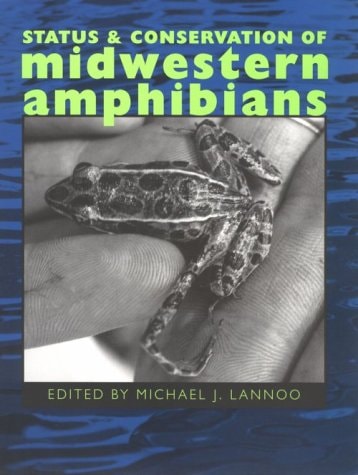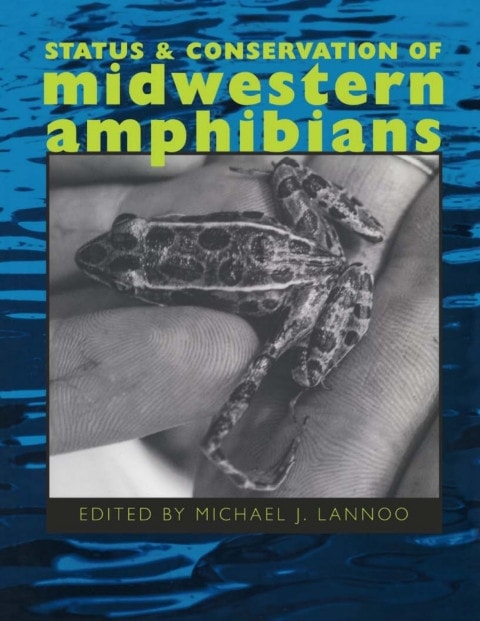
Status and Conservation of Midwestern Amphibians
0
0
As an Amazon Associate and affiliate partner, Menrva Books earns from qualifying purchases. Learn more
Author Description
In 1990 an international group of biologists, meeting to discuss rumors of declines in the number of amphibians, discovered that amphibian disappearances once thought to be a local problem were not—the problem was global. And, even more disturbing, amphibians were disappearing not just from areas settled by humans but from regions of the world once believed to be pristine. Under the mantle of the Declining Amphibian Populations Task Force, this timely book addresses three fundamental questions for the midwestern United States: are amphibians declining; if so, why; and, if so, what can be done to halt these losses? In the Midwest—defined here as Missouri, Iowa, Illinois, Indiana, Ohio, Minnesota, Wisconsin, and Michigan—there can be no doubt that the number of salamanders and frogs has declined with Euro-American settlement and the conversion to an agriculturally dominated landscape. Habitat loss and landscape fragmentation have been major factors in this decline, as have aquacultural uses of natural wetlands. Bullfrog introductions have eliminated populations of native amphibians, and collecting for the biological supply trade has reduced the number of individuals within many populations. The goal of the forty-two essays in this well-documented, well-illustrated book is to put between two covers all we know now about the status of midwestern amphibians. By doing this, the editor has created a readily accessible historical record for future studies. Organized into sections covering landscape patterns and biogeography, species status, regional and state status, diseases and toxins, conservation, and monitoring and applications, this landmark volume will serve as the foundation for amphibian conservation in the Midwest.
Menrva's Summary
THE THESIS
This book investigates the alarming decline of amphibian populations in the midwestern United States and proposes conservation strategies. The editor, Michael J. Lannoo, along with forty-two contributing biologists, addresses whether amphibians are declining, the reasons behind these disappearances, and potential solutions. The work synthesizes current knowledge on amphibian status, focusing on habitat loss, fragmentation, invasive species, and collection pressures as key factors contributing to these declines across a defined midwestern region.
THE SCOPE MAP
- Analysis of landscape patterns and biogeography affecting amphibian populations.
- Detailed status reports for various amphibian species.
- Regional and state-specific assessments of amphibian populations.
- Examination of diseases and toxins impacting amphibians.
- Comprehensive strategies for amphibian conservation.
- Discussions on monitoring techniques and practical applications for conservation efforts.
THE AUTHORITY PERSPECTIVE
This landmark volume serves as a foundational resource for amphibian conservation in the Midwest, consolidating extensive research on population status and contributing factors. The collection of essays provides a comprehensive historical record and a detailed examination of the challenges facing salamanders and frogs in the region. Its organization into distinct sections covering ecological patterns, species-specific data, and conservation actions makes it a valuable tool for researchers and policymakers alike. The book is recognized for its thorough documentation and illustration, aiming to guide future studies and conservation initiatives.
Page Count:
0
Publication Date:
1998-08-01
Publisher:
University of Chicago Press
ISBN-10:
1587292890
ISBN-13:
9781587292897
Science
Non-Fiction
Ecology
Conservation Biology
Amphibians
Zoology
Community Tags
Similar Books