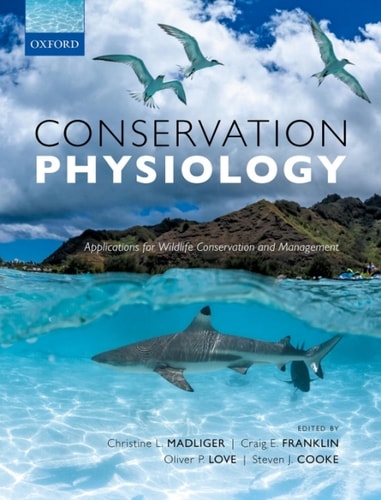
Conservation Physiology: Applications for Wildlife Conservation and Management
0
0
As an Amazon Associate and affiliate partner, Menrva Books earns from qualifying purchases. Learn more
Author Description
Conservation physiology is a rapidly expanding, multidisciplinary field that utilizes physiological knowledge and tools to understand and solve conservation challenges. This novel text provides the first consolidated overview of its scope, purpose, and applications, with a focus on wildlife. It outlines the major avenues and advances by which conservation physiology is contributing to the monitoring, management, and restoration of wild animal populations. This book also defines opportunities for further growth in the field and identifies critical areas for future investigation. By using a series of global case studies, contributors illustrate how approaches from the conservation physiology toolbox can tackle a diverse range of conservation issues including the monitoring of environmental stress, predicting the impact of climate change, understanding disease dynamics, improving captive breeding, and reducing human-wildlife conflict. Moreover, by acting as practical road maps across a diversity of sub-disciplines, these case studies serve to increase the accessibility of this discipline to new researchers. The diversity of taxa, biological scales, and ecosystems highlighted illustrate the far-reaching nature of the discipline and allow readers to gain an appreciation for the purpose, value, applicability, and status of the field of conservation physiology. Conservation Physiology is an accessible supplementary textbook suitable for graduate students, researchers, and practitioners in the fields of conservation science, eco-physiology, evolutionary and comparative physiology, natural resources management, ecosystem health, veterinary medicine, animal physiology, and ecology.
Menrva's Summary
THE THESIS
This text investigates how physiological knowledge and tools can be systematically applied to address contemporary challenges in wildlife conservation and management. The authors, Christine L. Madliger, Craig E. Franklin, and Oliver P. Love, synthesize current research to establish a framework for integrating physiological data into conservation strategies. By examining the intersection of animal biology and environmental protection, the book argues that physiological monitoring is a critical component for effective population management and restoration.
THE SCOPE MAP
What You Will Find
- Methodologies for monitoring environmental stress and disease dynamics
- Frameworks for predicting the impact of climate change on wild populations
- Strategies for improving captive breeding and mitigating human-wildlife conflict
- Global case studies across diverse taxa and ecosystems
Scope Limits
- The text focuses primarily on wildlife applications rather than human or laboratory-specific physiological research
- It serves as a supplementary overview rather than an exhaustive manual for every sub-discipline of physiology
THE AUTHORITY PERSPECTIVE
Experts identify this work as a foundational text for graduate students and practitioners seeking to integrate physiological data into conservation science. Readers frequently note that the book provides a clear, accessible entry point into a complex, multidisciplinary field.
Page Count:
368
Publication Date:
2020-01-01
Publisher:
OUP Oxford
ISBN-10:
0192581775
ISBN-13:
9780192581778
Science
Trades & Technology
Conservation Biology
Ecology
Environmental
Physiology
Zoology
Community Tags
Similar Books