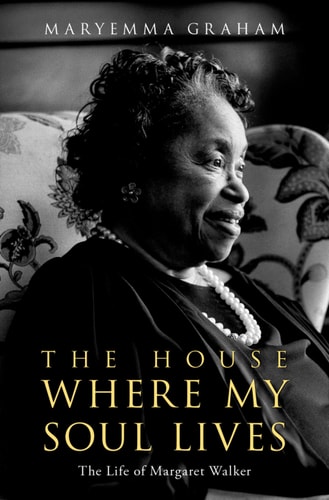
The House Where My Soul Lives: The Life of Margaret Walker
0
0
As an Amazon Associate and affiliate partner, Menrva Books earns from qualifying purchases. Learn more
Author Description
This first biography of poet and writer Margaret Walker (1915-98) offers a comprehensive close reading of a pillar in American culture for a majority of the 20th century. Without defining herself as a radical or even a feminist, Walker followed the precepts of both. She promoted the idea of the artist of tradition and social change, a public intellectual and an institution builder. Among the first to recognize the impact of black women in literature, Walker became a chief architect of what many have called the new Black South Renaissance. Her art was influenced early by Langston Hughes, her political understanding of the world by Richard Wright. Walker expanded both into a comprehensive view on art and humanism, which became a national platform for the center she founded in Mississippi that now bears her name. The House Where My Soul Lives provides a full account of Walker's life and new interpretations of her writings before and after the publication of her most well-known poem in the 1930s in Chicago. The book rejects the widely held view of Walker as the "angry black woman" and emphasizes what contemporary American culture owes to her decades of foundational work in what we know today as Black Studies, Women's Studies, and the Public Humanities. She was fierce in her claim to be "black, female and free" which gave her the authority to challenge all hierarchies, no matter at what cost. Featuring 80 archival photos and documents and based on never before examined personal papers and interviews with those who knew Walker personally, this book is required reading for all readers of biographies of American writers.
Menrva's Summary
THE THESIS
This biography investigates the life and intellectual legacy of Margaret Walker, examining how she navigated the intersection of art, tradition, and social activism to become a foundational figure in 20th-century American culture. Maryemma Graham, a scholar of African American literature, utilizes extensive archival research and personal interviews to reconstruct Walker's trajectory from her early influences in Chicago to her role as an institution builder in Mississippi. The text argues that Walker's contributions to Black Studies and the Public Humanities have been historically underestimated, challenging reductive characterizations of her public persona.
THE SCOPE MAP
What You Will Find
- A comprehensive chronological account of Margaret Walker's life from 1915 to 1998.
- Analysis of Walker's literary evolution, including her early work in Chicago and later developments in the Black South Renaissance.
- Primary source evidence derived from previously unexamined personal papers and interviews with Walker's contemporaries.
- A collection of 80 archival photographs and documents illustrating her professional and personal milestones.
THE AUTHORITY PERSPECTIVE
Scholars and critics recognize this work as a definitive biographical study that corrects long-standing misconceptions regarding Walker's political and artistic identity. The text is noted for its academic rigor and its success in situating Walker as a central architect of modern American literary and cultural studies.
Page Count:
696
Publication Date:
2022-01-01
Publisher:
Oxford University Press
ISBN-10:
0197506941
ISBN-13:
9780197506943
History
Poetry
Biography
English
Biography Autobiography
English & College Success
African Americans
Authors American
Women authors
Literary Criticism
Community Tags
Other Editions(2)

Similar Books