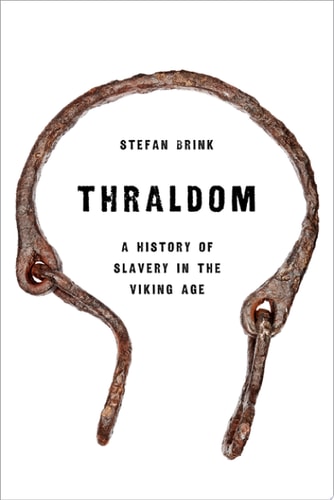
Thraldom: A History of Slavery in the Viking Age
0
0
As an Amazon Associate and affiliate partner, Menrva Books earns from qualifying purchases. Learn more
Author Description
Nordic slavery is an elusive phenomenon, with few similarities to the systematic exploitation of slaves in households, mines, and amphitheaters in the ancient Mediterranean or the widespread slavery at American plantations during the eighteenth and nineteenth centuries. Scandinavians in the early Middle Ages lived in a society foreign to us, characterized by different and shifting social statuses. A person could be at once socially respected and unfree. It was possible to hand oneself over as a slave to someone else in exchange for protection and food. One could be sentenced temporarily to enslavement for some offense but later purchase his manumission. Young men could enter into a kind of "contract" with a king or chieftain to join his retinue, accepting his authority, patronage, and jurisdiction, while at the same time making a quick social elevation. Slavery was widespread all over Europe during the early Middle Ages and Scandinavians, as Stefan Brink illustrates in this book, became a major player in the northern slave trade. However, the Vikings were not particularly interested in taking slaves to Scandinavia; instead, their "business model" seems to have been to raid, abduct, and then sell captured people at major slave markets. Their goal was not people but silver. Using a wide variety of source materials, including archaeology, runes, Icelandic sagas, early law, place names, personal names, and not least etymological and semantic analyses of the terminology of slaves, Thraldom provides the most thorough survey of slavery in the Viking Age.
Menrva's Summary
THE THESIS
This book investigates the complex, fluid nature of slavery in the Viking Age, challenging modern perceptions of the institution by examining its unique social and economic functions in early medieval Scandinavia. Stefan Brink, a scholar of early medieval history, utilizes a multidisciplinary approach to reconstruct the reality of thraldom. By synthesizing archaeological evidence, runic inscriptions, Icelandic sagas, and linguistic analysis, he argues that Viking slavery was less a static condition and more a dynamic, often temporary status tied to protection, debt, and economic gain.
THE SCOPE MAP
What You Will Find
- Analysis of the Viking "business model" focused on the abduction and sale of captives for silver at international markets.
- Examination of the shifting social statuses that allowed individuals to enter or exit states of unfree labor.
- Linguistic and etymological breakdown of historical terminology used to define slaves and social hierarchy.
- Integration of diverse primary sources including archaeology, place names, and early legal codes.
THE AUTHORITY PERSPECTIVE
Experts recognize this work as a comprehensive survey that clarifies the nuances of Scandinavian social structures during the early Middle Ages. Readers frequently note the academic rigor and the author's ability to synthesize disparate types of evidence into a coherent historical narrative.
Page Count:
404
Publication Date:
2021-01-01
Publisher:
Oxford University Press
ISBN-10:
0197532373
ISBN-13:
9780197532379
History
Ancient History
Social History
Viking Age
Slavery
European History
Scandinavia
Vikings
History of the Americas
Community Tags
Similar Books