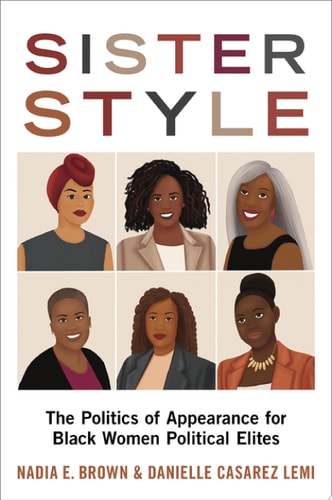
Sister Style: The Politics of Appearance for Black Women Political Elites
0
0
As an Amazon Associate and affiliate partner, Menrva Books earns from qualifying purchases. Learn more
Author Description
"They don't think I'm viable, because I'm a Black woman with natural hair and no husband." This comment was made by Stacey Abrams shortly before the 2018 Democratic primary after she became the first Black woman to win a majory party's nomination for governor. Abrams' sentiment reflects the wider environment for Black women in politics, in which racist and sexist cultural ideas have long led Black women to be demeaned and fetishized for their physical appearance. In Sister Style, Nadia E. Brown and Danielle Casarez Lemi argue that Black women's political experience and the way that voters evaluate them is shaped overtly by their skin tone and hair texture, with hair being a particular point of scrutiny. They ask what the politics of appearance for Black women mean for Black women politicians and Black voters, and how expectations about self-presentation differ for Black women versus Black men, White men, and White women. Black women running for office face pressure, often from campaign consultants and even close colleagues, to change their style in order to look more like White women. However, as this book shows, Black women candidates and elected officials react differently to these pressures depending on factors like age and incumbency. Moreover, Brown and Lemi delve into the ways in which Black voters react to Black female candidates based on appearance. They base their argument, in part, on focus groups with Black women candidates and elected officials, and show that there are generational differences that determine what sorts of styles Black women choose to adopt and to what extent they change their physical appearance based on external expectations.
Menrva's Summary
THE THESIS
How do the physical appearances of Black women in political office influence voter perception and the candidates' own professional strategies? Authors Danielle Casarez Lemi and Nadia E. Brown, both scholars of political science, investigate the intersection of race, gender, and political viability. They argue that Black women face unique, systemic pressures to conform to Eurocentric standards of beauty, which directly impacts their electoral success and personal agency. By examining the interplay between skin tone, hair texture, and political identity, the authors provide a framework for understanding the specific obstacles Black women navigate in the American political landscape.
THE SCOPE MAP
What You Will Find
- Analysis of the political impact of hair texture and skin tone on Black female candidates.
- Comparative study of self-presentation expectations between Black women, Black men, White men, and White women.
- Qualitative data derived from focus groups with Black women candidates and elected officials.
- Examination of generational differences in how Black women respond to external pressures regarding their appearance.
THE AUTHORITY PERSPECTIVE
Experts identify this work as a significant contribution to the study of political representation and identity politics. Readers frequently note the clarity with which the authors connect personal anecdotes to broader sociological trends in American governance.
Page Count:
231
Publication Date:
2021-01-01
Publisher:
Oxford University Press
ISBN-10:
0197540600
ISBN-13:
9780197540602
United States
Sociology
Comparative Politics
Women In Politics
Gender Studies
Woman Studies
Community Tags
Similar Books