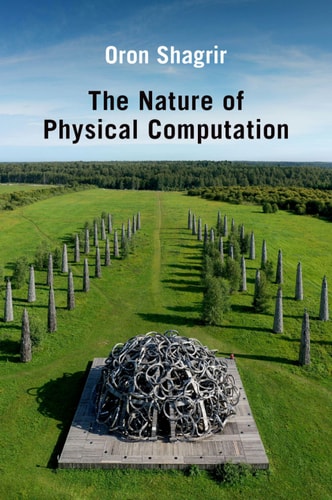
The Nature of Physical Computation
0
0
As an Amazon Associate and affiliate partner, Menrva Books earns from qualifying purchases. Learn more
Author Description
This is an open access title available under the terms of a CC BY-NC-ND 4.0 International license. It is free to read at Oxford Scholarship Online and offered as a free PDF download from OUP and selected open access locations.Computing systems are ubiquitous in contemporary life. Even the brain is thought to be a computing system of sorts. But what does it mean to say that an organ or a system computes? What is it about laptops, smartphones, and nervous systems that they are deemed to compute―and why does it seldom occur to us to describe stomachs, hurricanes, rocks, or chairs that way? These questions are key to the conceptual foundations of computational sciences, including computer science and engineering, and the cognitive and neural sciences.Oron Shagrir here provides an extended argument for the semantic view of computation, which states that semantic properties are involved in the nature of computing systems. The first part of the book provides general background. Although different in scope, these chapters have a common theme―that the linkage between the mathematical theory of computability and the notion of physical computation is weak. The second part of the book reviews existing non-semantic accounts of physical computation. Shagrir offers an in-depth analysis of three influential accounts, and argues that none of these accounts is satisfactory, but each of them highlights certain key features of physical computation that he eventually entwines into his own account of computation. The last part of the book presents and defends an original semantic account of physical computation, with a phenomenon known as 'simultaneous implementation' (or 'indeterminacy of computation') at its core.
Menrva's Summary
THE THESIS
This book investigates the conceptual foundations of physical computation to determine what distinguishes computing systems from non-computing physical entities. Oron Shagrir, a scholar in the philosophy of mind and cognitive science, evaluates the relationship between mathematical computability and physical systems. He argues for a semantic view of computation, positing that semantic properties are essential to defining what constitutes a computing system.
THE SCOPE MAP
What You Will Find
- A critical analysis of the disconnect between mathematical theory and physical computation.
- A detailed review and critique of existing non-semantic accounts of physical computation.
- An original semantic framework centered on the phenomenon of simultaneous implementation.
- Philosophical inquiry into the computational nature of biological systems, including the human brain.
THE AUTHORITY PERSPECTIVE
Experts recognize this work as a significant contribution to the philosophy of computation and cognitive science. Readers frequently note the academic density of the prose, which is intended for scholars and advanced students in the field.
Page Count:
318
Publication Date:
2021-01-01
Publisher:
Oxford University Press
ISBN-10:
0197552404
ISBN-13:
9780197552407
Philosophy
Science
Mathematics - General
Professional Career & Trade
Computer Science
Mathematics Statistics
Logic & Critical Reasoning
Machine Theory
Community Tags
Other Editions(3)
Similar Books








Reader Comments
Share Your Thoughts
No comments yet. Be the first to share your thoughts!