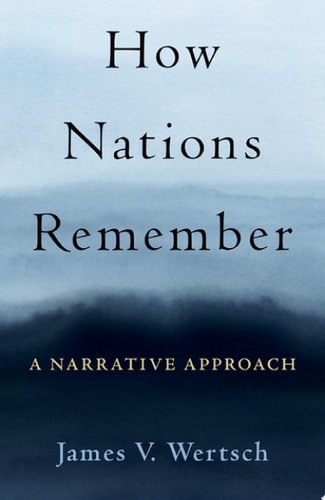
How Nations Remember: A Narrative Approach
0
0
As an Amazon Associate and affiliate partner, Menrva Books earns from qualifying purchases. Learn more
Author Description
How Nations Remember draws on multiple disciplines in the humanities and social sciences to examine how a nation's account of the past shapes its actions in the present. National memory can underwrite noble aspirations, but the volume focuses largely on how it contributes to the negative tendencies of nationalism that give rise to confrontation. Narratives are taken as units of analysis for examining the psychological and cultural dimensions of remembering particular events and also for understanding the schematic codes and mental habits that underlie national memory more generally. In this account, narratives are approached as tools that shape the views of members of national communities to such an extent that they serve as co-authors of what people say and think. Drawing on illustrations from Russia, China, Georgia, the United States, and elsewhere, the book examines how "narrative templates," "narrative dialogism," and "privileged event narratives" shape nations' views of themselves and their relations with others. The volume concludes with a list of ways to manage the disputes that pit one national community against another.
Menrva's Summary
THE THESIS
This book investigates how collective national narratives function as psychological and cultural tools that shape a nation's identity and influence its contemporary political actions. James V. Wertsch, a scholar in cognitive and cultural psychology, synthesizes research from the humanities and social sciences to analyze how specific historical accounts are internalized by citizens. He argues that these narrative templates act as cognitive frameworks, effectively co-authoring the thoughts and public discourse of national communities in ways that often exacerbate international conflict.
THE SCOPE MAP
What You Will Find
- Comparative analysis of national memory in Russia, China, Georgia, and the United States.
- Theoretical framework defining narrative templates, narrative dialogism, and privileged event narratives.
- Examination of the psychological mechanisms behind collective memory and nationalistic tendencies.
- Practical strategies and policy recommendations for managing and mitigating inter-national disputes.
THE AUTHORITY PERSPECTIVE
Scholars and students of political psychology frequently cite this work for its clear articulation of how historical memory is constructed and maintained within state structures. Experts highlight the text as a foundational resource for understanding the intersection of cognitive science and international relations.
Page Count:
288
Publication Date:
2021-01-01
Publisher:
Oxford University Press
ISBN-10:
0197551483
ISBN-13:
9780197551486
Psychology
History
Cultural Anthropology
International relations
Sociology
Special Topics
Community Tags
Similar Books