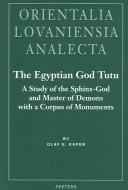
The Egyptian God Tutu
0
0
As an Amazon Associate and affiliate partner, Menrva Books earns from qualifying purchases. Learn more
Author Description
Tutu (Tithoes) was a popular god in the Ptolemaic and Roman periods of Egyptian history, with his origins in the earlier Egyptian religious tradition. The god provided protection against demons, and his appearance as a striding sphinx was often combined with symbols of his power and visual references to demons and other divinities. The god Tutu demonstrates the continuing vitality of the pharaonic religion under the pressure of foreign cultures and ideas. This monograph provides the first comprehensive study of the god Tutu. It is based upon a collection of attestations, largely unpublished, which derive from monuments in various parts of Egypt and from museum collections all over the world. Moreover, the results of recent archaeological field work in Shenhur and in the temple of Tutu in the Dakhla Oasis have been included in full. The catalogue of monuments is accompanied by an analysis of the god Tutu, his iconography and his place in the Egyptian religion.
Menrva's Summary
THE THESIS
The Egyptian God Tutu investigates the origins, iconography, and religious significance of a prominent deity from Egypt's Ptolemaic and Roman periods. This monograph presents the first comprehensive study of Tutu, a god known for protection against demons, whose imagery often combined sphinx-like forms with symbols of power and references to other divinities. The book draws upon a vast collection of largely unpublished attestations from monuments across Egypt and international museum collections, incorporating recent archaeological findings from Shenhur and the temple of Tutu in the Dakhla Oasis. It aims to demonstrate the enduring vitality of pharaonic religion amidst foreign cultural influences.
THE SCOPE MAP
- A detailed examination of the god Tutu's origins within earlier Egyptian religious traditions.
- Analysis of Tutu's iconography, including his striding sphinx appearance and associated symbols of power.
- A catalogue of monuments featuring Tutu, drawn from diverse Egyptian sites and global museum collections.
- Inclusion of recent archaeological results from Shenhur and the temple of Tutu in the Dakhla Oasis.
- An assessment of Tutu's place within the broader context of Egyptian religion during the Ptolemaic and Roman periods.
- Discussion on the god Tutu as a symbol of the resilience of pharaonic religion against foreign cultural pressures.
THE AUTHORITY PERSPECTIVE
This monograph is presented as the first comprehensive study of the Egyptian god Tutu, suggesting a scholarly and detailed approach to the subject. The author's reliance on a substantial collection of attestations, many previously unpublished, and recent archaeological findings indicates a work grounded in primary sources and current research. The book's focus on Tutu's role in demonstrating the vitality of pharaonic religion under foreign influence points to an analysis that connects religious history with broader cultural and political contexts. It is likely intended for specialists in Egyptology and ancient religious studies.
Page Count:
415
Publication Date:
2003-01-01
ISBN-10:
9042912170
ISBN-13:
9789042912175
Non-Fiction
History
Ancient History
Egyptology
Mythology
Community Tags
Similar Books














