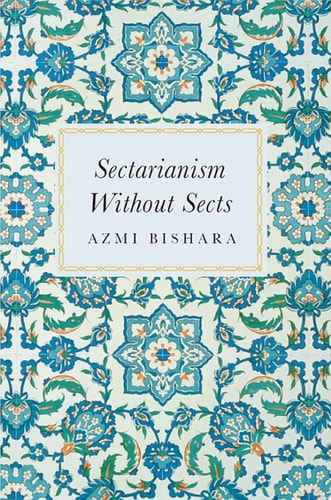
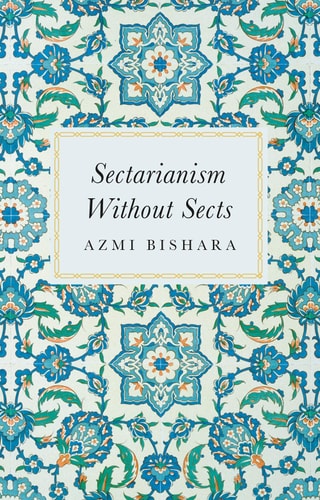
Sectarianism without Sects
0
0
As an Amazon Associate and affiliate partner, Menrva Books earns from qualifying purchases. Learn more
Author Description
This volume analyses the transformation of social sectarianism into political sectarianism across the Arab world. Using a framework of social theories and socio-historical analysis, the book distinguishes between ta'ifa, or 'sect', and modern ta'ifiyya, 'sectarianism', arguing that sectarianism itself produces 'imaginary sects'. It charts and explains the evolution of these phenomena and their development in Arab and Islamic history, as distinct from other concepts used to study religious groups within Western contexts. Bishara documents the role played by internal and external factors and rivalries among political elites in the formulation of sectarian identity, citing both historical and contemporary models. He contends that sectarianism does not derive from sect, but rather that sectarianism resurrects the sect in the collective consciousness and reproduces it as an imagined community under modern political and historical conditions. Sectarianism without Sects is a vital resource for engaging with the sectarian crisis in the Arab world. It provides a detailed historical background to the emergence of sect in the region, as well as a complex theoretical exploration of how social identities have assumed political significance in the struggle for power over the state.
Menrva's Summary
THE THESIS
This volume investigates the mechanism by which social sectarianism transforms into political sectarianism within the Arab world. Azmi Bishara, a prominent political philosopher and academic, utilizes a rigorous framework of social theory and socio-historical analysis to examine the construction of sectarian identity. He argues that sectarianism is not an inherent byproduct of religious groups, but rather a modern political phenomenon that actively constructs and reproduces 'imaginary sects' to serve elite power struggles. By distinguishing between the traditional concept of 'ta'ifa' and the modern political construct of 'ta'ifiyya', the author provides a critical lens through which to view the contemporary sectarian crisis.
THE SCOPE MAP
What You Will Find
- A socio-historical analysis of the evolution of sectarian identity in Arab and Islamic history.
- A theoretical framework distinguishing between traditional religious groups and modern political sectarianism.
- Examination of internal and external factors, including elite rivalries, that drive the politicization of identity.
- Comparative analysis of how these phenomena differ from Western models of religious group study.
THE AUTHORITY PERSPECTIVE
Experts identify this work as a significant contribution to the study of Middle Eastern political sociology, noting its dense theoretical rigor and historical depth. Scholars frequently cite the text as a necessary resource for understanding the structural origins of sectarian conflict beyond simplistic religious explanations.
Page Count:
539
Publication Date:
2022-01-01
Publisher:
Oxford University Press
ISBN-10:
0197650325
ISBN-13:
9780197650325
Religion
History
Religion and Politics
Sociology
Middle East
Community Tags
Other Editions(3)

Similar Books