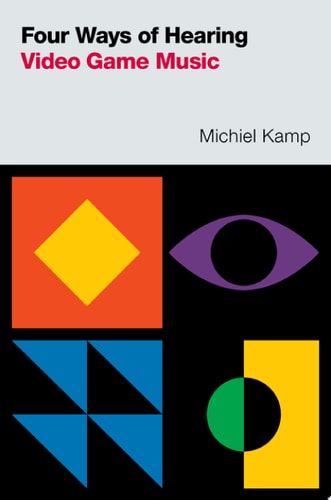
Four Ways of Hearing Video Game Music (Oxford Music / Media)
0
0
As an Amazon Associate and affiliate partner, Menrva Books earns from qualifying purchases. Learn more
Author Description
Four Ways of Hearing Video Game Music offers a novel account of the ways in which video games invite us to hear and listen to their music. By taking a phenomenological approach to characterize music in video games, author Michiel Kamp asks what it is we hear in the music when we play a game. Drawing on past phenomenological approaches to music as well as studies of music listening in a variety of disciplines such as aesthetics and ecological psychology, Kamp explains four main ways of hearing the same piece of music--through background, aesthetic, ludic, and semiotic hearing.As a background, music is not attended to at all, but can still be described in terms of moods, affordances, or equipment. Aesthetic hearing is a reflective attitude that invites hermeneutic interpretation; ludic hearing on the other hand invites "playing along" to the music, either through embodied movement, or in response to the music's cinematic or theatrical connotations. Finally, in semiotic hearing, Kamp argues that we hear music as transparent symbols or signals that provide information about the state of a game. The book investigates these four categories through detailed case studies of video games from a variety of eras and genres accompanied by gameplay recordings and images on a companion website.
Menrva's Summary
THE THESIS
This book investigates the phenomenological experience of music within video games to determine how players perceive and interact with auditory stimuli during gameplay. Author Michiel Kamp utilizes a framework rooted in aesthetics and ecological psychology to categorize the diverse ways individuals process game soundtracks. By analyzing the intersection of player agency and musical design, the text provides a structured methodology for understanding how music functions as both an atmospheric element and a functional tool within interactive media.
THE SCOPE MAP
What You Will Find
- A four-part phenomenological framework: background, aesthetic, ludic, and semiotic hearing.
- Analysis of music as a source of mood, affordance, and equipment within game environments.
- Detailed case studies covering a wide range of video game eras and genres.
- Integration of gameplay recordings and visual media via a companion website.
THE AUTHORITY PERSPECTIVE
Scholars and musicologists recognize this work as a significant contribution to the growing field of ludomusicology. Readers frequently note the academic density of the prose, which serves as a foundational text for those studying the intersection of sound design and interactive play.
Page Count:
224
Publication Date:
2024-01-01
Publisher:
Oxford University Press
ISBN-10:
0197651224
ISBN-13:
9780197651223
Psychology
Music
Video Games
Aesthetics
Media Studies
Community Tags
Similar Books