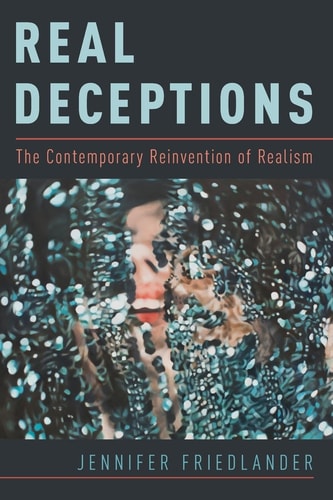
Black Screens, White Frames: Gilles Deleuze and the Filmmaking Machine
0
0
As an Amazon Associate and affiliate partner, Menrva Books earns from qualifying purchases. Learn more
Author Description
Cover -- Black Screens, White Frames -- Copyright -- Dedication -- Contents -- Acknowledgments -- Fade-in: Introduction. The Filmmaking Machine, Or Thirteen Ways Of Looking At The Black Or White Screen -- Overture -- Intermission -- Movement I: The Flux Of The Field -- Movement Ii: The Filmmaking Machine As An Abstract Art Machine -- Intermission -- Movement Iii: Thirteen Ways Of Looking At The Black Or White Screen -- Finale -- 1. Divergent Darkness: The Black Screen In Early Cinema -- Preface: Deleuze, Virilio, And Early Cinema Magician's Manuals And The Black Screen As Invisible Field: How To Disappear And Not Be Seen -- Cinema's Year Zero And Year Zen: The Black Screen As Frame Breaking And Effacement -- What Happened In The Dark Tunnel Of Cinema? -- 2. Convergent Codes: Fade-ins And Fade-outs As Rational Transitions In Classical Cinema -- The First Level: Frame -- The Second Level: Shot -- The Third Level: Montage -- The Movement-image And The Time-image: Rational And Irrational Cuts -- Fade-ins And Fade-outs As Rational Transitions -- Fade-ins And Fade-outs In Film Practice And Film Theory 3. The Black Or White Screen As A Tool Of Deterritorialization In Modern And Experimental Cinema -- The Genetic And Structural Power Of The Black Or White Screen In Modern Cinema -- A Thousand Point-cuts Of Darkness: The Black Or White Screen In Experimental Film Movements -- Abstract Or Absolute Film -- Lettrism And The Situationist International -- Fluxus -- Structural Film -- Paracinema -- 4. One Chapter Less: The Black Or White Screen In Minor Cinema -- Minor(itarian) Cinema(s): Philm And Blak Screens -- The Indeterminate Coordinates Of Minor Cinema -- The Missing Or Absent People The Any-space-whatevers Of Minor Cinema -- The Black Or White Screen As Stuttering And Elective Mutism -- 5. Folds To Black Or White In Minor Cinema And Art Practice -- White Wall, Black Holes: The Fold, The Enfolding-unfolding Aesthetics, And The Abstract Machine Of Faciality -- Folds To Black
Menrva's Summary
THE THESIS
This book investigates the ontological and aesthetic function of the black and white screen as a transformative mechanism within the history of cinema. Tanya Shilina-Conte utilizes the philosophical framework of Gilles Deleuze to analyze how these monochromatic intervals operate as tools of deterritorialization. By examining the transition from early cinema to modern experimental practices, the author argues that the black or white screen acts as an abstract machine that disrupts traditional narrative continuity and challenges the viewer's perception of the cinematic frame.
THE SCOPE MAP
What You Will Find
- A historical analysis of the black screen in early cinema and its role in visual effacement.
- A theoretical examination of fade-ins and fade-outs as rational transitions within classical montage.
- An exploration of the black or white screen as a tool of deterritorialization in experimental film movements like Fluxus and Structural Film.
- A discussion on the concept of 'minor cinema' and how monochromatic screens function as sites of elective mutism and aesthetic folding.
THE AUTHORITY PERSPECTIVE
Scholars in film theory and Deleuzian studies identify this work as a rigorous application of philosophical concepts to the technical mechanics of filmmaking. Readers frequently note the academic density of the prose, which requires a foundational understanding of both Deleuze's movement-image theory and experimental film history.
Page Count:
0
Publication Date:
1900-01-01
Publisher:
Oxford University Press,
ISBN-10:
0197511368
ISBN-13:
9780197511367
Philosophy
Cinéma
Media Studies
Motion pictures
Aesthetics
Film Theory
Cinema Studies
Community Tags
Similar Books