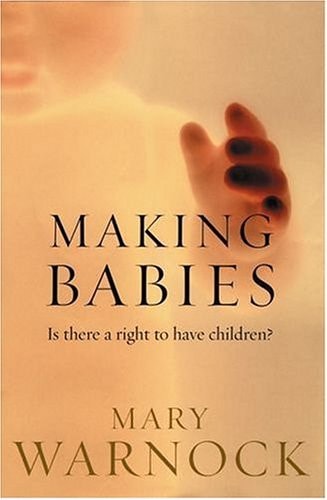
Making Babies: Is There a Right to Have Children
0
0
As an Amazon Associate and affiliate partner, Menrva Books earns from qualifying purchases. Learn more
Author Description
Is there a such thing as a universal right to have children? Should medical assistance to have children be available to everyone? Are all methods of assisted reproduction legitimate?The development of new reproductive technologies has spawned heated debate and deep controversy about how fertility treatments should be used clinically and by whom they should be controlled.Many individuals and groups claim access to assisted reproduction as an essential right--not only clinically infertile heterosexual couples, but also single women, gay couples, post-menopausal women, and career-oriented couples who wish to delay having children. Others argue that the simple desire to have children cannot be the sole criteria to determine whether assisted reproduction should be a human right. Furthermore, some object to providing fertility treatment on the basis of age, sexual orientation, or other lifestyle features.Mary Warnock steers a clear path through the web of complex issues underlying these divergent views. She analyzes what it means to claim something as a "right," examines the ethical problems faced by particular types of assisted reproduction, including artificial insemination, in-vitro fertilization, and surrogacy, and argues that in the future human cloning may well become a viable and acceptable form of treatment for some types of infertility.
Menrva's Summary
THE THESIS
This book investigates whether the desire to have children constitutes a universal human right and how society should regulate access to assisted reproductive technologies. Mary Warnock, a prominent philosopher and chair of the UK's Committee of Inquiry into Human Fertilisation and Embryology, utilizes her extensive background in moral philosophy to evaluate the ethical implications of fertility treatments. She presents a framework that balances individual autonomy against societal interests, questioning the legitimacy of various reproductive methods and the criteria used to determine eligibility for clinical assistance.
THE SCOPE MAP
What You Will Find
- Ethical analysis of artificial insemination, in-vitro fertilization, and surrogacy
- Philosophical examination of the concept of 'rights' in a medical context
- Discussion on the potential future role of human cloning in infertility treatment
- Evaluation of access criteria based on age, sexual orientation, and lifestyle
Scope Limits
- Does not provide a comprehensive legal guide for specific international jurisdictions
- Does not focus on the biological mechanics of fertility treatments beyond their ethical implications
THE AUTHORITY PERSPECTIVE
Experts recognize this work as a foundational text for understanding the ethical landscape of reproductive technology. Readers frequently note the clarity of Warnock's prose, which successfully navigates highly complex moral dilemmas for both academic and general audiences.
Page Count:
126
Publication Date:
2002-09-26
Publisher:
Oxford University Press
ISBN-10:
0192803344
ISBN-13:
9780192803344
Philosophy
Law
Sociology
Medical Ethics
Bioethics
Reproductive health
Community Tags
Similar Books