The House I Live In: Race in the American Century
0
0
As an Amazon Associate and affiliate partner, Menrva Books earns from qualifying purchases. Learn more
Author Description
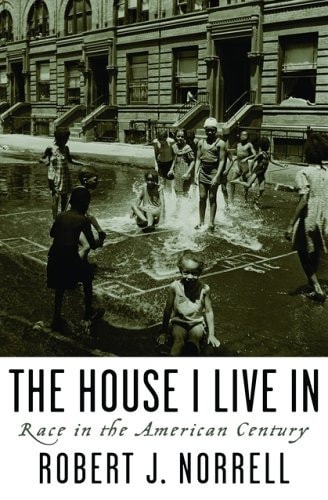
In The House I Live In, Award-winning Historian Robert J. Norrell Offers A Truly Masterful Chronicle Of American Race Relations Over The Last One Hundred And Fifty Years. This Scrupulously Fair And Insightful Narrative--the Most Ambitious And Wide-ranging History Of Its Kind--sheds New Light On The Ideologies, From White Supremacy To Black Nationalism, That Have Shaped Race Relations Since The Civil War. For, Norrell Argues, It Is Ideology, More Than Politics Or Economics, That Has Powerfully Sculpted The Landscape Of Race In America. Beginning With Reconstruction, Norrell Shows How The Democratic Values Of Liberty And Equality Were Infused With New Meaning By Abraham Lincoln, Yet Soon Became Meaningless For Generations Of African Americans, As White Supremacy Drove A Wedge Between The Races. Indeed, The Heart Of This Book Paints A Vivid Portrait Of The Long, Dangerous Struggle Of African Americans To Defeat This Pernicious Mode Of Thought. Along The Way, Norrell Offers Fresh And At Times Controversial Appraisals Of Figures Such As Booker T. Washington, W.e.b. Du Bois, And Martin Luther King, Jr., And Dissects The Ideas Of Racists Such As Novelist Thomas Dixon. Most Important, He Offers Striking New Insights Into Black-white History, Observing For Instance That The Civil Rights Movement Really Began As Early As The 1930s, And That Contrary To Much Recent Writing, The Cold War Was A Setback Rather Than A Boost To The Quest For Racial Justice. He Also Breaks New Ground On The Role Of Popular Culture And Mass Media In First Promoting, But Later Helping Defeat, Notions Of White Supremacy. Though The Struggle For Equality Is Far From Over, Norrell Writes That Today We Are Closer Than Ever To Fulfilling The Promise Of Our Democratic Values, A Promise First Made By Lincoln At The Battlefield Of Gettysburg.
Menrva's Summary
THE THESIS
This work investigates how shifting ideologies, rather than mere political or economic forces, have fundamentally sculpted the trajectory of race relations in the United States since the Civil War. Robert J. Norrell, a historian recognized for his scholarship on the American South, utilizes a broad historical framework to examine the tension between democratic ideals and the persistence of white supremacy. He analyzes the evolution of racial thought from the Reconstruction era through the late twentieth century, arguing that the struggle for equality is defined by the ongoing contest between exclusionary ideologies and the promise of democratic liberty. By evaluating the intellectual contributions of key figures and the influence of mass media, Norrell provides a comprehensive assessment of how these ideas have dictated the social landscape.
THE SCOPE MAP
What You Will Find
- A historical analysis of race relations spanning from the Reconstruction era to the modern American century.
- A critical examination of influential ideologies ranging from white supremacy to black nationalism.
- Reassessments of historical figures such as Booker T. Washington, W.E.B. Du Bois, and Martin Luther King, Jr.
- An exploration of the role of popular culture and mass media in both reinforcing and dismantling racial hierarchies.
THE AUTHORITY PERSPECTIVE
Historians and scholars frequently cite this text for its ambitious scope and its focus on the intellectual history of racial justice movements. Readers note that the prose is accessible yet rigorous, providing a nuanced perspective on the impact of the Cold War and popular media on the civil rights struggle.
Page Count:
400
Publication Date:
2005-01-01
Publisher:
Oxford University Press, Incorporated
ISBN-10:
0198023774
ISBN-13:
9780198023777
History
Race Relations
Civil Rights
American History
Social Science
Community Tags
Other Editions(2)
Similar Books

Reader Comments
Share Your Thoughts
No comments yet. Be the first to share your thoughts!