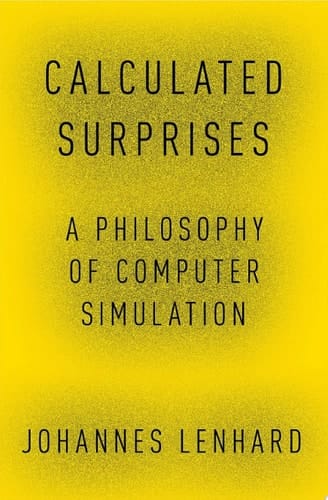
Author Description
Understanding causal structure is a central task of human cognition. Causal learning underpins the development of our concepts and categories, our intuitive theories, and our capacities for planning, imagination and inference. During the last few years, there has been an interdisciplinary revolution in our understanding of learning and reasoning: Researchers in philosophy, psychology, and computation have discovered new mechanisms for learning the causal structure of the world. This new work provides a rigorous, formal basis for theory theories of concepts and cognitive development, and moreover, the causal learning mechanisms it has uncovered go dramatically beyond the traditional mechanisms of both nativist theories, such as modularity theories, and empiricist ones, such as association or connectionism.
Menrva's Summary
THE THESIS
This work investigates the fundamental mechanisms by which humans and machines acquire an understanding of causal structure in the world. Alison Gopnik, a prominent developmental psychologist and philosopher, synthesizes research from cognitive science and computational modeling to argue that causal learning is the primary driver of human conceptual development. The text challenges traditional nativist and empiricist frameworks, proposing instead a formal, probabilistic approach to how individuals construct intuitive theories about their environment.
THE SCOPE MAP
What You Will Find
- Formal computational models of causal inference and Bayesian networks.
- Comparative analysis of nativist modularity theories versus empiricist connectionist models.
- Developmental psychology research regarding how children form concepts and categories.
- Philosophical implications of causal reasoning on human imagination and planning.
THE AUTHORITY PERSPECTIVE
Experts recognize this text as a foundational synthesis of interdisciplinary research in cognitive development and machine learning. Readers frequently note the technical density of the prose, which bridges complex philosophical inquiry with rigorous computational methodology.
Page Count:
0
Publication Date:
2007-01-01
Publisher:
NetLibrary, Incorporated
ISBN-10:
019803928X
ISBN-13:
9780198039280
Philosophy
Psychology
Computer Science
Psychology of Education
Epistemology
Philosophy General
Community Tags
Similar Books