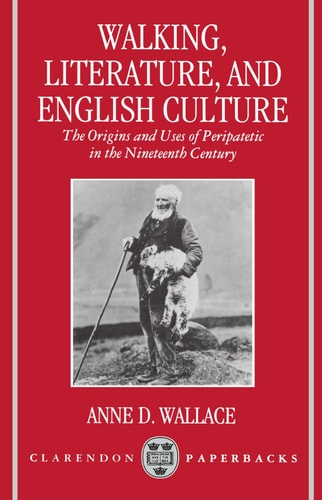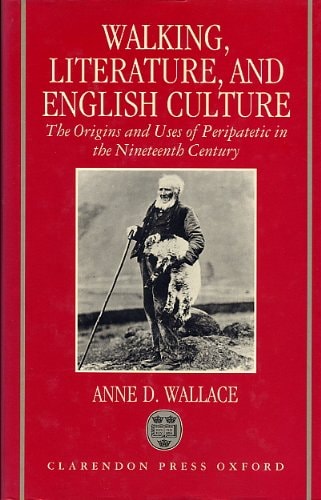
Walking, Literature, and English Culture: The Origins and Uses of Peripatetic in the Nineteenth Century
0
0
As an Amazon Associate and affiliate partner, Menrva Books earns from qualifying purchases. Learn more
Author Description
This is a cultural history of walking in nineteenth-century England, assessing its importance in literature and in culture. Re-reading Wordsworth in the context of contemporary changes in transportation, agriculture, and aesthetics, Anne Wallace articulates a previously unrecognized literary mode--peripatetic. Her discussions of eighteenth-century approaches to peripatetic and of John Clare's representations of walking as pastoral trace an itinerary through its varied uses in Victorian literature, notably in the work of Barrett Browning, Dickens, and Hardy. Increasingly frequent disappointment of peripatetic expectations reflects growing doubt about the writer's and the reader's ability to counter the disconnective tendencies of technology. The book represents a major contribution to the ongoing debates regarding rural English literature in which the author demonstrates how a proper understanding of peripatetic significantly enriches our assessment of a text's standpoint on key issues, including industrialization, class, and mobility.
Menrva's Summary
THE THESIS
This book investigates the cultural and literary significance of walking as a distinct mode of expression, termed 'peripatetic,' within nineteenth-century English society and literature. Anne D. Wallace, an expert in Victorian literature, examines how the act of walking served as a response to rapid industrialization, shifts in agricultural practices, and evolving transportation technologies. By analyzing the works of authors such as Wordsworth, Clare, Barrett Browning, Dickens, and Hardy, she argues that the peripatetic mode functions as a critical lens for understanding the era's anxieties regarding mobility and social disconnection.
THE SCOPE MAP
What You Will Find
- A comprehensive cultural history of walking in nineteenth-century England.
- An analysis of the 'peripatetic' literary mode and its evolution from the eighteenth century.
- Case studies of major Victorian authors including Wordsworth, John Clare, Elizabeth Barrett Browning, Charles Dickens, and Thomas Hardy.
- An examination of how walking reflects broader societal tensions regarding industrialization, class structures, and technological advancement.
THE AUTHORITY PERSPECTIVE
Scholars and critics recognize this work as a significant contribution to the study of rural English literature and the intersection of physical mobility with aesthetic expression. Readers frequently note the academic density of the prose and the author's meticulous attention to the historical context of Victorian literary tropes.
Page Count:
280
Publication Date:
1993-08-26
Publisher:
Oxford University Press
ISBN-10:
0198119860
ISBN-13:
9780198119869
History
British literature
Nineteenth century
Walking
Cultural History
Literary Criticism