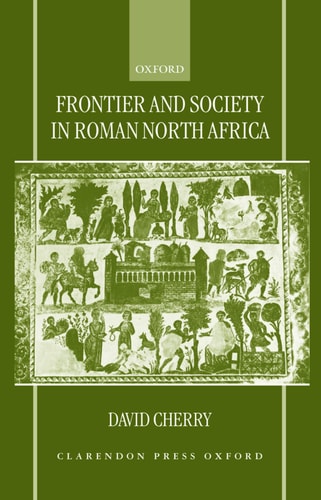
Frontier and Society in Roman North Africa
0
0
As an Amazon Associate and affiliate partner, Menrva Books earns from qualifying purchases. Learn more
Author Description
This book seeks to define the cultural, social, and economic consequences of the Roman occupation of North Africa (c.50 B.C.-250 A.D.), mainly in the semi-arid frontier-zone of what is today Algeria. It also offers a fresh look at the development and purpose of the north African frontier-system. Through detailed examination of the region's archaeological and epigraphic record, including the marriage-patterns recorded on its surviving, funerary inscriptions, Cherry demonstrates that there was probably little acculturation in the north African frontier-zone. The Roman army, long considered to be a powerful instrument of Romanization and a bridge to the indigenous societies of the provinces of the Empire, is shown to have functioned primarily as an army of occupation on the north African frontier, segregated, by choice or circumstance, from the region's aboriginal population.
Menrva's Summary
THE THESIS
This book investigates the cultural, social, and economic impact of the Roman occupation in North Africa, specifically questioning the extent of Romanization within the frontier zones. David Cherry, a scholar of Roman history, utilizes archaeological evidence and epigraphic records to challenge the traditional view that the Roman military acted as a primary agent of cultural assimilation. By analyzing funerary inscriptions and regional settlement patterns, the author argues that the Roman army functioned as a segregated occupying force rather than a bridge to indigenous societies.
THE SCOPE MAP
What You Will Find
- Analysis of the Roman frontier system in modern-day Algeria between 50 B.C. and 250 A.D.
- Examination of marriage patterns derived from surviving funerary inscriptions.
- Evaluation of the Roman military's role as an instrument of social and cultural change.
- Synthesis of archaeological data to assess the degree of acculturation between Roman soldiers and aboriginal populations.
THE AUTHORITY PERSPECTIVE
Historians and archaeologists recognize this work as a significant contribution to the study of Roman provincial life and military-civilian relations. Readers frequently note the academic density of the prose and the rigorous reliance on epigraphic evidence to support the author's conclusions.
Page Count:
312
Publication Date:
1998-12-31
Publisher:
Clarendon Press
ISBN-10:
0198152353
ISBN-13:
9780198152354
History
Roman Empire
Archaeology
Rome
Africa North
Sociology
Ancient History
Community Tags
Similar Books