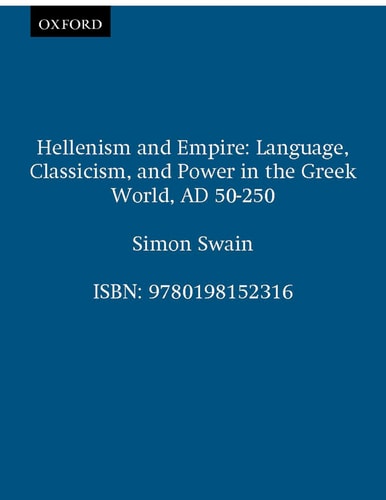
Hellenism and Empire: Language, Classicism, and Power in the Greek World AD 50-250
0
0
As an Amazon Associate and affiliate partner, Menrva Books earns from qualifying purchases. Learn more
Author Description
Hellenism and Empire explores identity, politics, and culture in the Greek world of the first three centuries AD, the period known as the second sophistic. The sources of this identity were the words and deeds of classical Greece, and the emphasis placed on Greekness and Greek heritage was far greater then than at any other time. Yet this period is often seen as a time of happy consensualism between the Greek and Roman halves of the Roman Empire. The first part of the book shows that Greek identity came before any loyalty to Rome (and was indeed partly a reaction to Rome), while the views of the major authors of the period, which are studied in the second part, confirm and restate the prior claims of Hellenism.
Menrva's Summary
THE THESIS
This work investigates how the Greek-speaking population of the Roman Empire navigated their cultural identity and political loyalty during the period of the Second Sophistic. Simon Swain, a scholar of the ancient world, utilizes a vast array of literary and historical sources to challenge the traditional view of a harmonious integration between Greek and Roman cultures. He argues that the resurgence of classical Greek heritage served as a primary mechanism for maintaining a distinct identity that often preceded or conflicted with allegiance to the Roman state.
THE SCOPE MAP
What You Will Find
- Analysis of the cultural and political climate in the Greek world from AD 50 to 250.
- Examination of the Second Sophistic movement and its role in defining Greekness.
- Critical study of major Greek authors and their intellectual contributions to the era.
- Exploration of the tension between local Greek identity and the overarching Roman imperial structure.
THE AUTHORITY PERSPECTIVE
Experts recognize this text as a foundational study for understanding the complexities of identity in the Roman East. Readers frequently note the academic density of the prose, which provides a rigorous analysis of the period's intellectual and political landscape.
Page Count:
512
Publication Date:
1998-06-11
Publisher:
Clarendon Press
ISBN-10:
0198152310
ISBN-13:
9780198152316
History
Cultural History
Hellenism
Political History
Ancient History
Community Tags
Similar Books