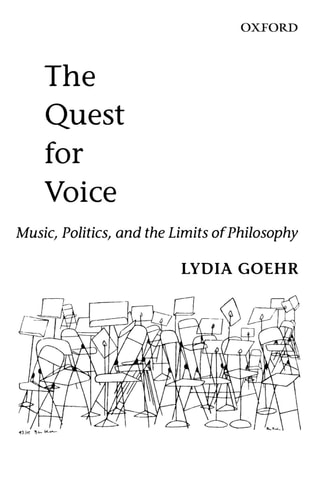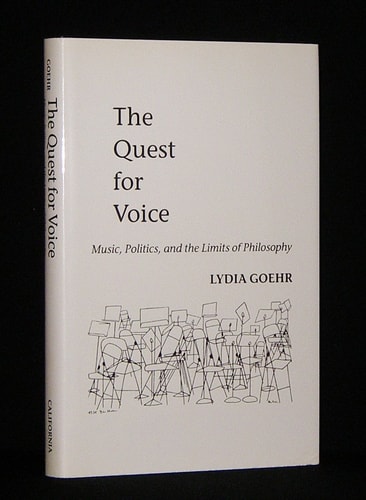
The Quest for Voice: On Music, Politics, and the Limits of Philosophy: The 1997 Ernest Bloch Lectures
0
0
As an Amazon Associate and affiliate partner, Menrva Books earns from qualifying purchases. Learn more
Author Description
Concentrating on the music, politics, and philosophy of Richard Wagner, Lydia Goehr addresses some fundamental questions of German Romanticism: Is all music musical? Is music made less musical by the presence of words? What is musical autonomy? How do composers avoid censorship? How are composers affected by exile? Can music articulate a 'politics for the future'? What is the relation between music and philosophy?
Menrva's Summary
THE THESIS
This work investigates the complex intersection of music, political ideology, and philosophical inquiry through the lens of Richard Wagner’s life and compositions. Lydia Goehr, a scholar of musicology and philosophy, utilizes the framework of the 1997 Ernest Bloch Lectures to examine the tensions inherent in German Romanticism. She evaluates how musical autonomy, censorship, and the experience of exile influence the creative output of composers and their capacity to articulate political visions for the future.
THE SCOPE MAP
What You Will Find
- Analysis of Richard Wagner’s operatic works and theoretical writings
- Philosophical inquiry into the relationship between musical form and linguistic content
- Historical examination of censorship and exile in 19th-century German music
- Theoretical exploration of musical autonomy and its political implications
THE AUTHORITY PERSPECTIVE
Scholars and musicologists frequently cite this text as a rigorous examination of the intersection between aesthetics and political theory. Readers often note the academic density of the prose, which requires a foundational understanding of both Wagnerian musicology and continental philosophy to fully appreciate the arguments presented.
Page Count:
247
Publication Date:
1998-10-01
Publisher:
Clarendon Press
ISBN-10:
0198166141
ISBN-13:
9780198166146
Music
Philosophy
Music and state
Music
Romanticism In Music