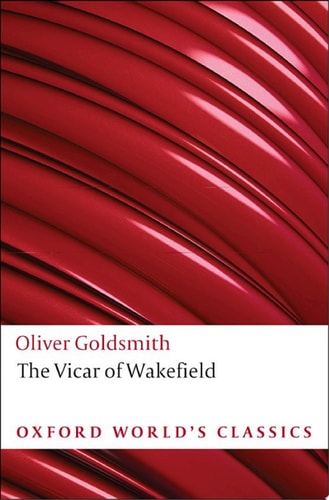
The Vicar of Wakefield
0
0
As an Amazon Associate and affiliate partner, Menrva Books earns from qualifying purchases. Learn more
Author Description
'He loved all mankind; for fortune prevented him from knowing there were rascals.' Oliver Goldsmith's hugely successful novel of 1766 remained for generations one of the most highly regarded and beloved works of eighteenth-century fiction. It depicts the fall and rise of the Primrose family, presided over by the benevolent vicar, the narrator of a fairy-tale plot of impersonation and deception, the abduction of a beautiful heroine and the machinations of an aristocratic villain. By turns comic and sentimental, the novel's popularity owes much to its recognizable depiction of domestic life and loving family relationships. Regarded by some as a straightforward and well-intentioned novel of sentiment, and by others as a satire on the very literary conventions and morality it seems to embody, The Vicar of Wakefield contains, in the figure of the vicar himself, one of the most harmlessly simply and unsophisticated yet also ironically complex narrators ever to appear in English fiction. ABOUT THE SERIES: For over 100 years Oxford World's Classics has made available the widest range of literature from around the globe. Each affordable volume reflects Oxford's commitment to scholarship, providing the most accurate text plus a wealth of other valuable features, including expert introductions by leading authorities, helpful notes to clarify the text, up-to-date bibliographies for further study, and much more.
Menrva's Summary
THE PULSE
The Primrose family faces a series of escalating misfortunes that test their moral fortitude and the benevolent nature of their patriarch, Dr. Primrose. Dr. Primrose, a clergyman of simple habits, serves as the narrator for this account of his family's sudden descent from prosperity into poverty and imprisonment. He must navigate the predatory schemes of an aristocratic villain while attempting to protect his children from social ruin and deception. The narrative framework relies on the vicar's own voice, which oscillates between earnest moralizing and a lack of awareness regarding his own gullibility. The world is defined by the rigid social hierarchies of the eighteenth century, where reputation and financial stability dictate the survival of the family unit.
INSIDE THE PAGES
- First-person retrospective narration by the titular vicar
- Satirical treatment of the sentimental novel genre
- Exploration of moral resilience in the face of adversity
- Use of dramatic irony regarding the narrator's perception of events
- Depiction of 18th-century English domestic life
- Plot elements involving abduction and social deception
- Contrast between rural simplicity and aristocratic corruption
- Didactic tone balanced with comedic situational mishaps
THE COLLECTIVE ECHO
Discussion often centers on the dual nature of the text, which functions simultaneously as a sincere moral fable and a sharp satire of contemporary literary conventions. Readers frequently highlight the character of Dr. Primrose as a figure of both genuine kindness and frustrating naivety, which complicates the reader's emotional engagement with his plight. Critics often examine how the novel balances its sentimental focus on family bonds with the darker, more cynical realities of the social landscape it portrays. The pacing is noted for its rapid succession of calamities, which some interpret as a parody of the improbable plot twists common in the fiction of the era. Ultimately, the work remains a subject of debate regarding whether Goldsmith intended to uphold or undermine the moral values he presents through his protagonist.
Page Count:
256
Publication Date:
2006-01-01
Publisher:
OUP Oxford
ISBN-10:
0191604712
ISBN-13:
9780191604713
Satire
Classic Literature
18th century
English
English & College Success
Domestic fiction
Community Tags
Similar Books