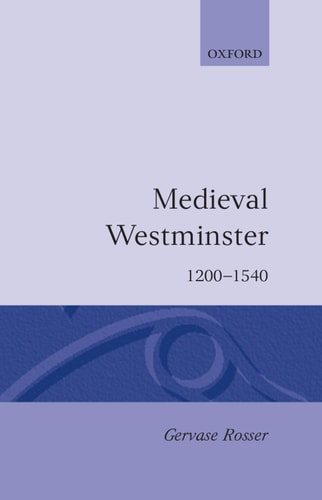
Medieval Westminster: 1200-1540
0
0
As an Amazon Associate and affiliate partner, Menrva Books earns from qualifying purchases. Learn more
Author Description
This unique look at the town of Westminster is a study of the nature of the urban community in the late Middle Ages. As a small town, characterized by a complex economy and society but lacking legal incorporation, Westminster typified the large yet neglected class of medieval urban centers. Rosser here examines the forces that existed to contain tensions and ensure continuity in the community. The regular expressions of shared interests and common identity--in local government, parochial life, and the activities of guilds--are shown to be essential to the survival of the town. A valuable contribution to the study of the social and economic history of the late Middle Ages, this work will be of interest to students of late medieval economic and social history as well as to urban historians.
Menrva's Summary
THE THESIS
This work investigates how the town of Westminster maintained social cohesion and continuity between 1200 and 1540 despite lacking formal legal incorporation. Gervase Rosser, a specialist in medieval urban history, utilizes archival records and local administrative documents to analyze the town's unique socio-economic structure. He argues that shared communal activities, such as guild participation and parochial governance, served as the primary mechanisms for managing internal tensions and ensuring the town's survival as a distinct urban entity.
THE SCOPE MAP
What You Will Find
- Analysis of the socio-economic dynamics of Westminster from the 13th to the 16th century.
- Examination of the role of guilds and parish life in fostering communal identity.
- Evaluation of local government structures in the absence of formal legal incorporation.
- Synthesis of primary source data regarding urban development and social stratification.
THE AUTHORITY PERSPECTIVE
Historians and scholars of the medieval period recognize this text as a foundational study on the nature of unincorporated urban centers. Readers frequently note the academic density of the prose and the meticulous archival research that supports Rosser's conclusions.
Page Count:
448
Publication Date:
1989-10-12
Publisher:
Clarendon Press
ISBN-10:
0198201567
ISBN-13:
9780198201564
History
Economic History
United Kingdom
Social History
Urban History
Community Tags
Similar Books