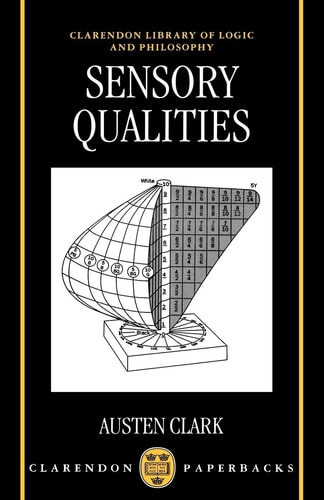
A Theory of Sentience
0
0
As an Amazon Associate and affiliate partner, Menrva Books earns from qualifying purchases. Learn more
Author Description
Austen Clark offers a general account of the forms of mental representation that we call "sensory." Drawing on the findings of current neuroscience, Clark defends the hypothesis that the various modalities of sensation share a generic form that he calls "feature-placing." Sensing proceeds by picking out place-times in or around the body of the sentient organism, and characterizing qualities (features) that appear at those place-times. The hypothesis casts light on many other troublesome phenomena, including the varieties of illusion, the problem of projection, the notion of a visual field, and the existence of sense-data.
Menrva's Summary
THE THESIS
This book investigates the fundamental nature of sensory mental representation and proposes a unified framework for understanding how organisms perceive their environment. Austen Clark, a philosopher specializing in the philosophy of mind and cognitive science, synthesizes contemporary neuroscientific data to argue for the "feature-placing" hypothesis. He posits that all sensory modalities function by identifying specific place-times relative to the organism and assigning qualitative features to those coordinates, thereby providing a systematic account of how sensory experience is structured.
THE SCOPE MAP
What You Will Find
- A comprehensive analysis of the "feature-placing" hypothesis as a universal model for sensory modalities.
- Examination of complex phenomena such as visual fields, sensory illusions, and the problem of projection.
- Integration of empirical neuroscientific findings with traditional philosophical inquiries into sense-data.
- A theoretical framework for distinguishing between various forms of mental representation.
THE AUTHORITY PERSPECTIVE
Experts in philosophy of mind and cognitive science recognize this work as a rigorous contribution to the study of perception. Readers frequently note the technical density of the prose, which requires a strong background in analytical philosophy and neuroscience to fully grasp the author's arguments.
Page Count:
304
Publication Date:
2000-05-25
Publisher:
Clarendon Press
ISBN-10:
0198238517
ISBN-13:
9780198238515
Psychology
Philosophy
Epistemology
Neuroscience
Community Tags
Similar Books