The Coherence of Theism
0
0
As an Amazon Associate and affiliate partner, Menrva Books earns from qualifying purchases. Learn more
Author Description
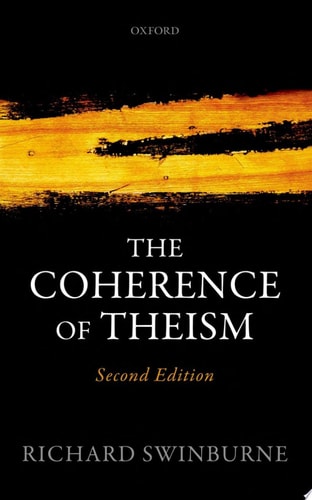
God is often defined as a spirit who is present everywhere, knows everything, is able to do anything, is the creator of the world, is perfectly free, perfectly good, eternal, immutable, one whose commands impose obligations on individuals, and who is in some sense a necessary being. In The Coherence of Theism, the first volume in a highly acclaimed trilogy on the philosophy of religion, Richard Swinburne examines what it means, and whether it is coherent philosophically, to say that there is such a being. He concludes that, despite philosophical objections, many of the claims about God made by religious believers are in fact coherent. In addition, he discusses claims that do not cohere and demonstrates that some important claims cohere only if the words by which they are expressed are stretched or used analogously.
Menrva's Summary
THE THESIS
This work investigates whether the traditional attributes assigned to God by religious believers are logically coherent and philosophically defensible. Richard Swinburne, a prominent philosopher of religion, utilizes analytical methods to dissect the definitions of divine attributes such as omniscience, omnipotence, and necessity. By applying rigorous logical scrutiny to theological claims, he evaluates which assertions hold up under philosophical examination and which require analogical interpretation to maintain consistency.
THE SCOPE MAP
What You Will Find
- Logical analysis of divine attributes including omnipotence, omniscience, and immutability
- Examination of the concept of a necessary being within the framework of theism
- Evaluation of analogical language in religious discourse
- Systematic critique of common philosophical objections to theistic claims
THE AUTHORITY PERSPECTIVE
Experts recognize this text as a foundational contribution to analytic philosophy of religion and the first installment of Swinburne's influential trilogy. Readers frequently note the high level of academic density and the precise, technical nature of the logical arguments presented throughout the volume.
Page Count:
308
Publication Date:
1977-12-29
Publisher:
Oxford University Press
ISBN-10:
019824410X
ISBN-13:
9780198244103
Philosophy
Religion
Theology
Logic
Metaphysics
God attributes