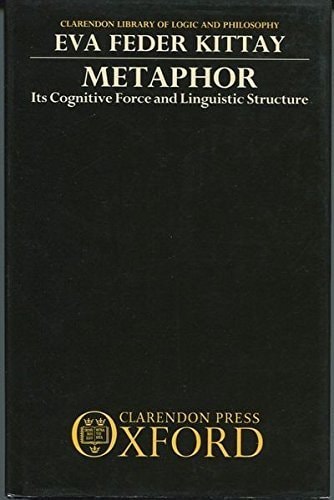
Metaphor: Its Cognitive Force and Linguistic Structure
0
0
As an Amazon Associate and affiliate partner, Menrva Books earns from qualifying purchases. Learn more
Author Description
A detailed revision and refinement of the "semantic theory of metaphor," this book provides a comprehensive philosophical theory explicating metaphor's cognitive contribution. According to the author, metaphor effects a transference of meaning, not between two terms, but between two structured domains of content, or "semantic fields." Semantic fields, construed as necessary to a theory of word-meaning, provide the contrastive and affinitive relations that govern a term's literal use. In a metaphoric use, these relations are projected into a second domain which is thereby reordered with significant cognitive effects. Amply illustrated with sensitive and systematic analyses of metaphors found in literature, philosophy, science, and quotidian language, this book forges a new understanding of the relation between metaphoric and literal meaning.
Menrva's Summary
THE THESIS
How does metaphor function as a cognitive mechanism rather than merely a linguistic ornament? Eva Feder Kittay, a philosopher of language, argues that metaphor operates through the transference of meaning between structured semantic fields. By analyzing the contrastive and affinitive relations within these fields, she demonstrates how metaphoric projection reorders our understanding of reality and facilitates significant cognitive shifts.
THE SCOPE MAP
What You Will Find
- A refined semantic theory of metaphor based on domain transference.
- A structural analysis of semantic fields and their influence on literal meaning.
- Systematic examinations of metaphors across literature, philosophy, and scientific discourse.
- A framework for understanding the cognitive contribution of figurative language.
THE AUTHORITY PERSPECTIVE
Experts recognize this work as a foundational text in the philosophy of language and cognitive linguistics. Readers frequently note the academic density of the prose, which requires careful engagement with the author's formal semantic arguments.
Page Count:
368
Publication Date:
1987-10-29
Publisher:
Oxford University Press
ISBN-10:
0198249357
ISBN-13:
9780198249351
Philosophy
Logic
Metaphor
Linguistics
Semantics
Community Tags
Other Editions(3)

Similar Books