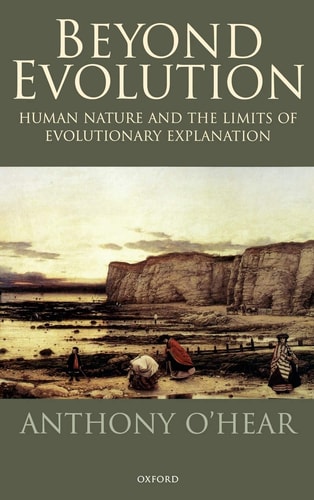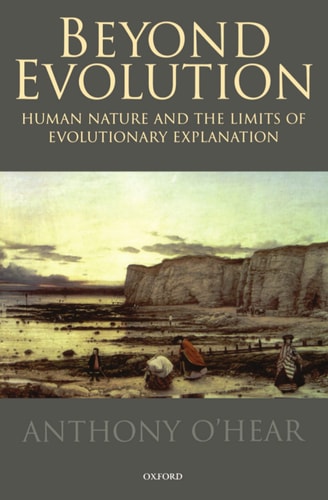
Beyond Evolution: Human Nature and the Limits of Evolutionary Explanation
0
0
As an Amazon Associate and affiliate partner, Menrva Books earns from qualifying purchases. Learn more
Author Description
In this controversial book O'Hear takes a stand against the fashion for explaining human behavior in terms of evolution. He contends that while the theory of evolution is successful in explaining the development of the natural world in general, it is of limited value when applied to the human world. Because of our reflectiveness and our rationality we take on goals and ideals which cannot be justified in terms of survival-promotion or reproductive advantage. O'Hear examines the nature of human self-consciousness, and argues that evolutionary theory cannot give a satisfactory account of such distinctive facets of human life as the quest for knowledge, moral sense, and the appreciation of beauty; in these we transcend our biological origins. It is our rationality that allows each of us to go beyond not only our biological but also our cultural inheritance: as the author says in the Preface, "we are prisoners neither of our genes nor of the ideas we encounter as we each make our personal and individual way through life."
Menrva's Summary
THE THESIS
Does evolutionary theory provide a sufficient framework to explain the complexities of human behavior, morality, and consciousness? Anthony O'Hear, a philosopher of note, challenges the prevailing trend of biological reductionism by arguing that human rationality and self-consciousness exist beyond the reach of natural selection. He posits that while evolutionary biology explains the development of the natural world, it fails to account for the unique human capacity to pursue ideals, knowledge, and aesthetic appreciation that offer no direct reproductive or survival advantage. By distinguishing between biological imperatives and reflective human agency, O'Hear asserts that individuals possess the capacity to transcend both genetic and cultural determinism.
THE SCOPE MAP
What You Will Find
- A philosophical critique of evolutionary psychology and sociobiology.
- An analysis of human self-consciousness and the nature of rationality.
- Arguments regarding the limitations of survival-promotion as a basis for moral and intellectual pursuits.
- A discussion on the distinction between biological inheritance and individual agency.
THE AUTHORITY PERSPECTIVE
Critics and scholars often identify this work as a significant philosophical counter-argument to strict evolutionary determinism. Readers frequently note the academic density of the prose, which requires a foundational understanding of both biological theory and philosophical inquiry.
Page Count:
232
Publication Date:
1999-09-23
Publisher:
Clarendon Press
ISBN-10:
0198250045
ISBN-13:
9780198250043
Philosophy
Anthropology
Science and Religion
Ethics
Evolutionary Biology
Evolution