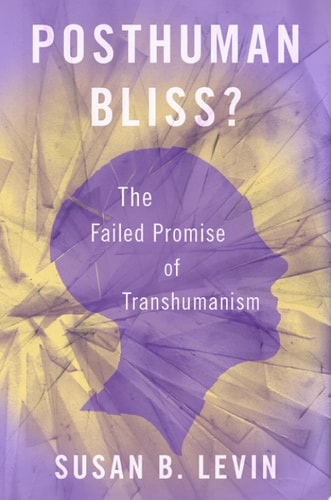
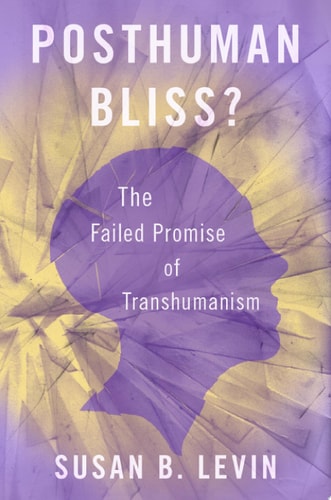
Posthuman Bliss?: The Failed Promise of Transhumanism
0
0
As an Amazon Associate and affiliate partner, Menrva Books earns from qualifying purchases. Learn more
Author Description
A tightly argued and expansive examination of the pitfalls of transhumanism that reacquaints us with what it means to live well. Advocates of transhumanism, or "radical" enhancement, urge us to pursue the biotechnological heightening of select capacities -- above all, cognitive ability -- so far beyond any human limit that the beings with those capacities would exist on a higher ontological plane. For proponents of such views, humanity's self-transcendence through advancements in science and technology may even be morally required. Consequently, the human stakes of how we respond to transhumanism are immeasurably high. In Posthuman Bliss? The Failed Promise of Transhumanism, Susan B. Levin challenges transhumanists' overarching commitments regarding the mind and brain, ethics, liberal democracy, knowledge, and reality, showing their notion of humanity's self-transcendence into "posthumanity" to be little more than fantasy. Uniting philosophical with scientific arguments, Levin mounts a significant challenge to transhumanists' claim that science and technology support their vision of posthumanity. In a clear and engaging style, she dismantles transhumanists' breezy assurances that posthumans will emerge if we but allocate sufficient resources to that end. Far from offering theoretical and practical "proof of concept" for the vision that they urge upon us, Levin argues, transhumanists engage inadequately with cognitive psychology, biology, and neuroscience, often relying on questionable or outdated views within those fields. Having shown in depth why transhumanism should be rejected, Levin argues forcefully for a holistic perspective on living well that is rooted in Aristotle's virtue ethics but that is adapted to liberal democracy. This holism is thoroughly human, in the best of senses: It directs us to consider worthy ends for us as human beings and to do the irreplaceable work of understanding ourselves rather than relying on technology and science to be our salvat
Menrva's Summary
THE THESIS
Does the transhumanist pursuit of radical biotechnological enhancement offer a viable path to human flourishing, or is it a flawed project based on scientific misunderstanding? Susan B. Levin, a professor of philosophy, evaluates the core tenets of transhumanism by synthesizing contemporary findings in cognitive psychology, biology, and neuroscience. She argues that the movement's vision of self-transcendence relies on outdated scientific assumptions and fails to account for the complexities of human nature, ultimately proposing an alternative framework rooted in Aristotelian virtue ethics adapted for modern liberal democracy.
THE SCOPE MAP
What You Will Find
- A critical analysis of transhumanist claims regarding cognitive enhancement and ontological status.
- A synthesis of philosophical arguments alongside current data from neuroscience and biology.
- An alternative ethical framework based on holistic human development and virtue ethics.
Scope Limits
- The text does not provide a comprehensive history of all technological advancements in biotechnology.
- It does not offer a technical manual for specific medical or genetic engineering procedures.
THE AUTHORITY PERSPECTIVE
Scholars and critics frequently note the rigorous interdisciplinary approach Levin employs to dismantle the theoretical foundations of radical enhancement. Experts highlight this as a significant contribution to the ethics of technology, particularly for its ability to bridge the gap between abstract philosophical inquiry and empirical scientific reality.
Page Count:
960
Publication Date:
2020-12-03
Publisher:
Oxford University Press Academic US
ISBN-10:
0190051507
ISBN-13:
9780190051501
Philosophy
Political
Neuroscience
Transhumanism
Social
Political Philosophy
Social Philosophy
Ethics
Science and Technology
Community Tags
Other Editions(3)
Similar Books












Reader Comments
Share Your Thoughts
No comments yet. Be the first to share your thoughts!