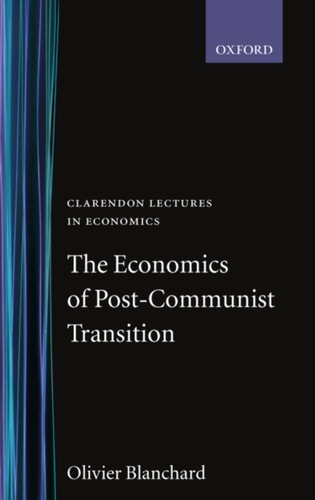
The Economics of Post-Communist Transition
0
0
As an Amazon Associate and affiliate partner, Menrva Books earns from qualifying purchases. Learn more
Author Description
Transition in Central and Eastern Europe, as Blanchard points out, has adhered to a U-shaped response in terms of economic output--that is, a sharp decline in output followed by a recovery. Today, most of the countries of Central Europe seem to have enjoyed a steady upswing, while most Eastern European nations still appear to be near the bottom of the U. This book traces the courses, causes, and implications of this pattern, arguing that two basic mechanisms dominate such transition. The first is the reallocation between the state and private sectors, with a contraction of activities in the former and an expansion in the latter. The second is the restructuring of the old state sector, with the opportunity for large improvements in productivity.Against this background, the book's focus shifts to three particular factors: the adjustment of employment and wages in state firms to the initial shock of reduced demand for their goods; the dynamics of restructuring and privatization; and the relationship between reallocation, restructuring, and traffic in the labor market. The final section summarizes the discussion, and in doing so builds a general equilibrium model as a preliminary to the analysis of three sets of issues: the role of unemployment benefits and privatization rules; the interaction between transition and fiscal policy; and the evolution of the support for reform. The model is then used to address the thorny issue of the ideal speed for economic reform.The latest offering from a distinguished expert on the economics of transition, this is one of the first book-length analyses of the process of moving from a centrally-planned to a market economy.
Menrva's Summary
THE THESIS
This book investigates the economic mechanisms and structural patterns that define the transition from centrally-planned systems to market economies in Central and Eastern Europe. Olivier Blanchard, a distinguished economist, utilizes empirical data and theoretical modeling to explain the characteristic U-shaped output response observed in post-communist nations. He argues that the transition is primarily driven by the reallocation of resources between state and private sectors and the internal restructuring of state-owned enterprises to improve productivity.
THE SCOPE MAP
What You Will Find
- Analysis of the U-shaped economic output pattern observed in post-communist states.
- Examination of employment and wage adjustments within state firms following initial demand shocks.
- A general equilibrium model designed to evaluate fiscal policy and privatization rules.
- Theoretical assessment regarding the optimal speed of economic reform.
THE AUTHORITY PERSPECTIVE
Experts recognize this work as a foundational text for understanding the early macroeconomic challenges of post-communist transition. Readers frequently note the academic density of the prose, which requires a solid background in economic theory to fully grasp the proposed models.
Page Count:
168
Publication Date:
1999-07-29
Publisher:
Oxford University Press
ISBN-10:
0198293992
ISBN-13:
9780198293996
Economics
History
Public Policy
Post-communism
Macroeconomics
Economics history
Community Tags
Other Editions(2)
Similar Books