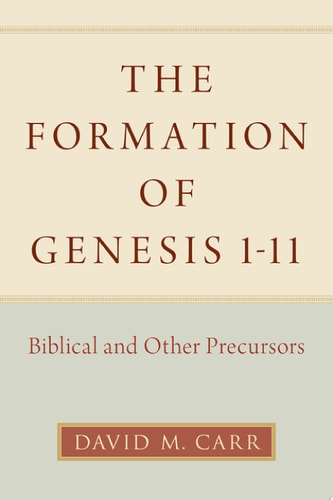
The Formation of Genesis 1-11: Biblical and Other Precursors
0
0
As an Amazon Associate and affiliate partner, Menrva Books earns from qualifying purchases. Learn more
Author Description
There is general agreement in the field of Biblical studies that study of the formation of the Pentateuch is in disarray. David M. Carr turns to the Genesis Primeval History, Genesis 1-11, to offer models for the formation of Pentateuchal texts that may have traction within this fractious context. Building on two centuries of historical study of Genesis 1-11, this book provides new support for the older theory that the bulk of Genesis 1-11 was created out of a combination of two originally separate source strata: a Priestly source and an earlier non-Priestly source that was used to supplement the Priestly framework. Though this overall approach contradicts some recent attempts to replace such source models with theories of post-Priestly scribal expansion, Carr does find evidence of multiple layers of scribal revision in the non-P and P sources, from the expansion of an early independent non-Priestly primeval history with a flood narrative and related materials to a limited set of identifiable layers of Priestly material that culminate in the P-like redaction of the whole. This book synthesizes prior scholarship to show how both the P and non-Priestly strata of Genesis also emerged out of a complex interaction by Judean scribes with non-biblical literary traditions, particularly with Mesopotamian textual traditions about primeval origins. The Formation of Genesis 1-11 makes a significant contribution to scholarship on one of the most important texts in the Hebrew Bible and will influence models for the formation of the Hebrew Bible as a whole.
Menrva's Summary
THE THESIS
This work investigates the complex literary formation of the Genesis Primeval History (Genesis 1-11) to propose a model for Pentateuchal development that addresses current scholarly fragmentation. David M. Carr, a scholar in the field of Biblical studies, utilizes two centuries of historical-critical research to argue for the existence of two primary source strata: a Priestly source and an earlier non-Priestly source. By examining the interaction between these Judean scribal traditions and Mesopotamian literature, Carr provides a framework that accounts for both the foundational sources and the subsequent layers of scribal revision.
THE SCOPE MAP
What You Will Find
- Analysis of the Priestly (P) and non-Priestly source strata in Genesis 1-11.
- Examination of the influence of Mesopotamian primeval origin narratives on Hebrew texts.
- A model for understanding scribal expansion and redaction processes.
Scope Limits
- The study focuses specifically on the Primeval History (Genesis 1-11) rather than the entire Pentateuch.
- The text prioritizes historical-critical source models over some contemporary post-Priestly expansion theories.
THE AUTHORITY PERSPECTIVE
Scholars recognize this text as a significant contribution to the ongoing debate regarding the composition of the Hebrew Bible. Readers frequently note the academic density of the prose, which is intended for specialists and advanced students of biblical criticism.
Page Count:
306
Publication Date:
2020-05-19
Publisher:
Oxford University Press
ISBN-10:
0190062541
ISBN-13:
9780190062545
History
New Used & Rental Textbooks
Bible Study
Near East
Jewish
Prayerbooks
Sacred Writings
Literary Criticism
Judaism
Theology
Commentaries
Community Tags
Similar Books