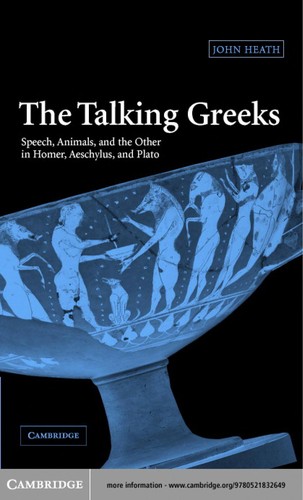
Talking Greeks: Speech, Animals, and the Other in Homer, Aeschylus, and Plato
0
0
As an Amazon Associate and affiliate partner, Menrva Books earns from qualifying purchases. Learn more
Author Description
Author description coming soon. We're reaching out to them in the ether...
Menrva's Summary
THE THESIS
This book investigates how ancient Greek thinkers, specifically in the works of Homer, Aeschylus, and Plato, used the concept of speech and the animal world to define humanity and understand the 'other'. Heath examines the linguistic and philosophical frameworks employed by these foundational figures of Western thought. The analysis focuses on how the articulation of speech, particularly in contrast to animal sounds, served to delineate the boundaries of the human, the civilized, and the rational. The work explores the implications of these distinctions for understanding social structures, ethical considerations, and the very nature of being.
THE SCOPE MAP
- Analysis of speech and animal vocalizations in Homeric epics.
- Examination of the role of dialogue and rhetoric in Aeschylean tragedy.
- Exploration of Plato's philosophical dialogues concerning language, reason, and the non-human.
- The construction of the 'other' through linguistic and conceptual distinctions.
- The relationship between speech, identity, and the definition of humanity in antiquity.
- Comparative study across three pivotal figures of ancient Greek literature and philosophy.
THE AUTHORITY PERSPECTIVE
The book is likely to be regarded as a scholarly contribution to classical studies, offering a nuanced interdisciplinary approach that bridges literary analysis, philosophy, and linguistics. Its focus on foundational Greek texts suggests it will appeal to academics and advanced students in these fields. The examination of speech and its role in defining humanity and the 'other' points to a text that engages with enduring questions of identity and difference. The comparative method across Homer, Aeschylus, and Plato indicates a comprehensive and potentially influential analysis.
Page Count:
0
Publication Date:
2026-11-25
ISBN-10:
0521832640
Non-Fiction
Philosophy
History
Psychology
Animals
Linguistics
Ancient History
Community Tags
Similar Books