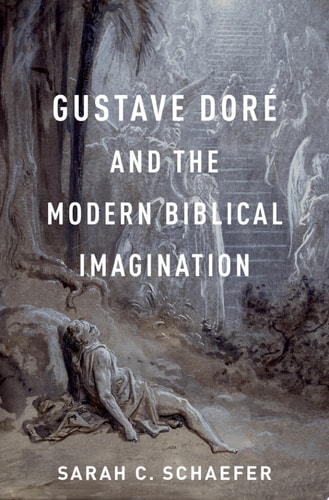
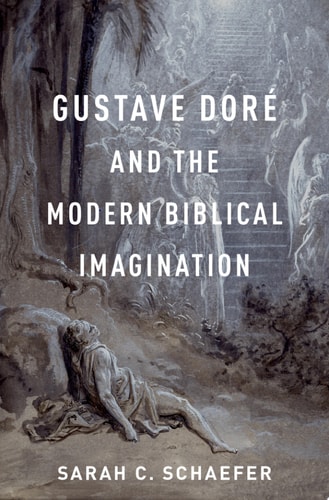
Gustave Doré and the Modern Biblical Imagination
0
0
As an Amazon Associate and affiliate partner, Menrva Books earns from qualifying purchases. Learn more
Author Description
Gustave Doré and the Modern Biblical Imagination explores the role of biblical imagery in modernity through the lens of Gustave Doré (1832-83), whose work is among the most reproduced and adapted scriptural imagery in the history of Judeo-Christianity. First published in France in late 1865, Doré's Bible illustrations received widespread critical acclaim among both religious and lay audiences, and the next several decades saw unprecedented dissemination of the images on an international scale. In 1868, the Doré Gallery opened in London, featuring monumental religious paintings that drew 2.5 million visitors over the course of a quarter-century; when the gallery's holdings travelled to the United States in 1892, exhibitions at venues like the Art Institute of Chicago drew record crowds. The United States saw the most creative appropriations of Doré's images among a plethora of media, from prayer cards and magic lantern slides to massive stained-glass windows and the spectacular epic films of Cecile B. DeMille.This book repositions biblical imagery at the center of modernity, an era that has often been defined through a process of secularization, and argues that Doré's biblical imagery negotiated the challenges of visualizing the Bible for modern audiences in both sacred and secular contexts. A set of texts whose veracity and authority were under unprecedented scrutiny in this period, the Bible was at the center of a range of historical, theological, and cultural debates. Gustave Doré is at the nexus of these narratives, as his work established the most pervasive visual language for biblical imagery in the past two and a half centuries, and constitutes the means by which the Bible has persistently been translated visually.
Menrva's Summary
THE THESIS
This book investigates how Gustave Doré’s biblical illustrations functioned as a primary visual language for modernity, challenging the assumption that the nineteenth century was defined solely by secularization. Sarah C. Schaefer, an art historian, utilizes a wide array of archival materials, exhibition records, and visual media to argue that Doré’s work served as a crucial bridge for audiences navigating the tension between traditional religious authority and modern skepticism. By examining the dissemination of these images, the author demonstrates how the Bible remained a central, contested site of cultural production during an era of rapid technological and theological change.
THE SCOPE MAP
What You Will Find
- Analysis of the international dissemination of Doré’s Bible illustrations from 1865 onward.
- Examination of the Doré Gallery’s impact in London and the United States.
- Case studies on the appropriation of biblical imagery in media ranging from magic lantern slides to early epic cinema.
Scope Limits
- The text does not provide a comprehensive biography of Gustave Doré’s entire artistic career.
- It does not focus on theological exegesis, but rather on the visual and cultural reception of the imagery.
THE AUTHORITY PERSPECTIVE
Scholars and art historians recognize this work as a significant contribution to the study of nineteenth-century visual culture and the intersection of religion and modernity. Readers frequently note the academic rigor of the prose and the depth of the archival research presented throughout the text.
Page Count:
376
Publication Date:
2021-09-28
Publisher:
Oxford University Press
ISBN-10:
0190075813
ISBN-13:
9780190075811
Social Sciences - Religion - Christianity
Visual Culture
Religious
Humanities - Art - Individual Artists
Bible Study
Arts & Photography
19th Century
Subjects & Themes
Art History
New Used & Rental Textbooks
Sociology of Religion
Community Tags
Other Editions(2)
Similar Books