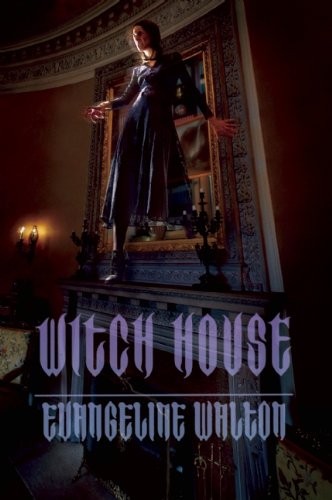
Witch House
0
0
As an Amazon Associate and affiliate partner, Menrva Books earns from qualifying purchases. Learn more
Author Description
For three hundred years the de Quincy clan had lived in the old house on the lonely New England island. People in the small town nearby stayed clear of the place; they knew that the de Quincys were trouble.Now Elizabeth Ann Quincy Stone had stirred up the ancient menace. First she'd gone and married outside the family, to a well-meaning but weak-willed man who couldn't withstand the evil of Elizabeth's powerful brother, Joseph. Then she'd borne a child, and dared to try to raise her away from the ancestral manse.But after her husband mysteriously died, the inheritance brought her back. And now her little girl was the next victim of the tortures refined over centuries by the obsessed, evil people who called themselves family. What hope could two innocents and a skeptical psychiatrist have against the heirs to the mantle of the mad, sadistic founder of...Witch House.
Menrva's Summary
THE PULSE
Elizabeth Ann Quincy Stone must protect her daughter from the malevolent influence of her ancestral home and the sadistic machinations of her brother, Joseph. After the death of her husband, Elizabeth is forced to return to the isolated New England estate that has housed her family for three centuries. She faces a concentrated, multi-generational evil that seeks to claim her child as the next victim of the clan's dark traditions. The narrative follows her struggle against both the physical isolation of the island and the psychological manipulation exerted by her brother, utilizing a third-person perspective to detail the encroaching supernatural threat.
INSIDE THE PAGES
- Atmospheric setting within a secluded New England island estate
- Exploration of generational trauma and inherited family curses
- Conflict between modern skepticism and ancient occult practices
- Focus on the psychological degradation of the protagonists
- Pacing centered on the slow accumulation of dread
- Character-driven tension between family members
- Integration of gothic horror tropes with domestic drama
- Examination of the power dynamics within a closed, secretive clan
THE COLLECTIVE ECHO
Readers frequently highlight the oppressive atmosphere that Evangeline Walton constructs within the confines of the de Quincy estate. Discussion often centers on the effectiveness of the gothic elements in grounding the supernatural threats in a tangible, unsettling reality. Critics note that the pacing prioritizes psychological tension over overt action, allowing the sense of dread to build steadily throughout the narrative. Many observers appreciate the focus on the internal dynamics of the family, which serves to heighten the stakes for the protagonist and her child. The work is often cited for its ability to maintain a consistent tone of unease without relying on excessive gore or traditional jump scares.
Page Count:
196
Publication Date:
1991-01-01
Publisher:
Collier Books
ISBN-10:
0020262426
ISBN-13:
9780020262428
Fantasy
Horror
United States
Occult
Science Fiction
Gothic
Supernatural