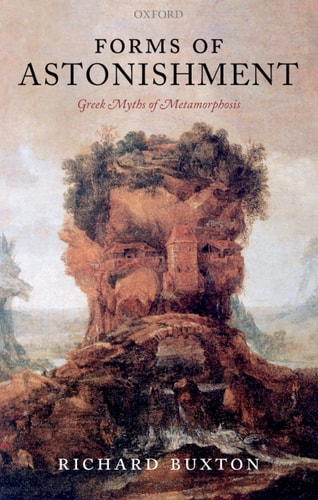
Forms of Astonishment: Greek Myths of Metamorphosis
0
0
As an Amazon Associate and affiliate partner, Menrva Books earns from qualifying purchases. Learn more
Author Description
In this illustrated study, Richard Buxton analyzes Greek literary narratives and visual representations of the metamorphosis of humans and gods, as evidenced from Homer to Nonnos. Such tales have become familiar in their Ovidian dress, as in the best-selling translation by Ted Hughes; Buxton explores their Greek antecedents. He investigates such issues as: how do different contexts shape the way in which metamorphosis is narrated? How do the assumptions of commentators about "strangeness" affect how metamorphosis is interpreted? How far should an interpreter allow "contextual charity" to render more acceptable a belief such as that in metamorphosis? What are the implications of the notions of 'astonishment' (Greek: thambos) in a range of narratives about transformation?Throughout Forms of Astonishment Buxton draws comparisons between the Greek evidence and data from other religious traditions, ancient and modern; he also introduces comparative material from the sciences, from modern painting and literature, and from the cinema and computer graphics. In investigating metamorphoses of gods Buxton revisits the concept of anthropomorphism, arguing that the fact that Greek divinities were believed to change shape does not undermine the fundamentally humanlike form of Greek divinity. He also examines certain strands of Greek tradition, particularly among the philosophers, which called metamorphosis into question, whether in relation to the gods or to humans. Individual chapters deal with transformations into the landscape and into plants or trees--in the latter case transformation stories are set against a background of cultural beliefs about "seminal" substances such as blood and tears. Overall, Forms of Astonishment raises issues relevant to an understanding of broad aspects of Greek culture, and illuminates issues explored by anthropologists and students of religion.
Menrva's Summary
THE THESIS
This study investigates the cultural, religious, and philosophical significance of metamorphosis narratives within ancient Greek literature and visual art. Richard Buxton, a scholar of Greek mythology, utilizes a comparative framework to examine how these transformation myths functioned within their original contexts. By contrasting Greek sources with modern scientific, cinematic, and religious data, he challenges traditional interpretations of anthropomorphism and the nature of divine change.
THE SCOPE MAP
What You Will Find
- Analysis of Greek metamorphosis narratives from Homer to Nonnos.
- Comparative studies involving modern literature, cinema, and computer graphics.
- Examination of philosophical critiques regarding the possibility of physical transformation.
- Investigation into the cultural symbolism of landscape, plants, and bodily substances like blood and tears.
THE AUTHORITY PERSPECTIVE
Scholars recognize this work as a rigorous examination of the intersection between classical mythology and anthropological theory. Experts frequently highlight the text for its interdisciplinary approach, noting that it provides a necessary corrective to Ovid-centric views of Greek transformation myths.
Page Count:
302
Publication Date:
2018-01-02
Publisher:
Oxford University Press
ISBN-10:
0198706995
ISBN-13:
9780198706991
Religion
History
Metamorphosis
Ancient History
Anthropology
Mythology
Community Tags
Similar Books