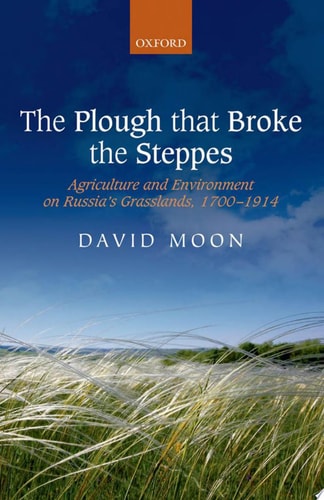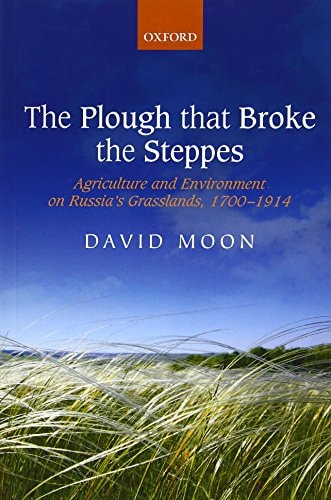
The Plough that Broke the Steppes: Agriculture and Environment on Russia's Grasslands, 1700-1914
0
0
As an Amazon Associate and affiliate partner, Menrva Books earns from qualifying purchases. Learn more
Author Description
This is the first environmental history of Russia's steppes. From the early-eighteenth century, settlers moved to the semi-arid but fertile grasslands from wetter, forested regions in central and northern Russia and Ukraine, and from central Europe. By the late-nineteenth century, they had turned the steppes into the bread basket of the Russian Empire and parts of Europe. But there was another side to this story. The steppe region was hit by recurring droughts, winds from the east whipped up dust storms, the fertile black earth suffered severe erosion, crops failed, and in the worst years there was famine.David Moon analyses how naturalists and scientists came to understand the steppe environment, including the origins of the fertile black earth. He also analyses how scientists tried to understand environmental change, including climate change. Farmers, and the scientists who advised them, tried different ways to deal with the recurring droughts: planting trees, irrigation, and cultivating the soil. More sustainable, however, were techniques of cultivation to retain scarce moisture in the soil. Among the pioneers were Mennonite settlers. Such approaches aimed to work with the environment, rather than trying to change it by planting trees or supplying more water artificially.The story is similar to the Dust Bowl on the Great Plains of the USA, which share a similar environment and environmental history. David Moon places the story of the steppes in the wider context of the environmental history of European colonialism around the globe.
Menrva's Summary
THE THESIS
This book investigates the environmental consequences of agricultural expansion on the Russian steppes between 1700 and 1914. David Moon, a specialist in Russian history, utilizes a combination of archival research, scientific records, and historical analysis to examine how settlers transformed the semi-arid grasslands into a major agricultural hub. The work argues that this transformation was defined by a constant tension between human ambition and the volatile ecological realities of the region, such as drought and soil erosion.
THE SCOPE MAP
What You Will Find
- Analysis of the ecological impact of agricultural migration from forested regions to the Russian steppes.
- Historical documentation of scientific efforts to understand black earth formation and climate variability.
- Comparative study between the Russian steppe experience and the American Dust Bowl.
- Evaluation of traditional and modern cultivation techniques aimed at moisture retention and environmental sustainability.
THE AUTHORITY PERSPECTIVE
Scholars recognize this work as a foundational text for understanding the environmental history of the Russian Empire. Readers frequently note the academic density of the prose and the author's success in placing Russian agricultural history within a broader global context.
Page Count:
344
Publication Date:
2014-12-02
Publisher:
Oxford University Press
ISBN-10:
0198722877
ISBN-13:
9780198722878
History
Steppes
Environmental History
Russian History
Agriculture
Geography