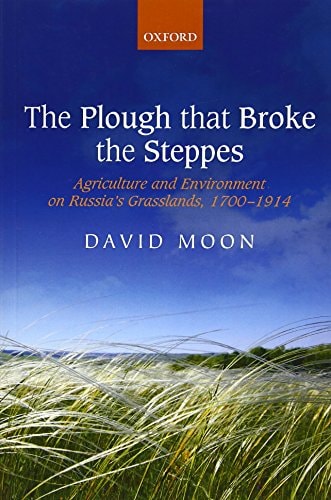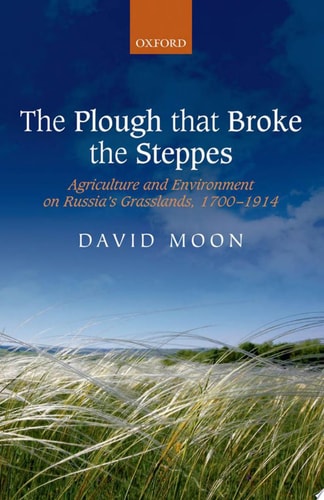
The Plough that Broke the Steppes: Agriculture and Environment on Russia's Grasslands, 1700-1914
0
0
As an Amazon Associate and affiliate partner, Menrva Books earns from qualifying purchases. Learn more
Author Description
This is the first environmental history of Russia's steppes. From the early-eighteenth century, settlers moved to the semi-arid but fertile grasslands from wetter, forested regions in central and northern Russia and Ukraine, and from central Europe. By the late-nineteenth century, they had turned the steppes into the bread basket of the Russian Empire and parts of Europe. But there was another side to this story. The steppe region was hit by recurring droughts, winds from the east whipped up dust storms, the fertile black earth suffered severe erosion, crops failed, and in the worst years there was famine.David Moon analyses how naturalists and scientists came to understand the steppe environment, including the origins of the fertile black earth. He also analyses how scientists tried to understand environmental change, including climate change. Farmers, and the scientists who advised them, tried different ways to deal with the recurring droughts: planting trees, irrigation, and cultivating the soil. More sustainable, however, were techniques of cultivation to retain scarce moisture in the soil. Among the pioneers were Mennonite settlers. Such approaches aimed to work with the environment, rather than trying to change it by planting trees or supplying more water artificially.The story is similar to the Dust Bowl on the Great Plains of the USA, which share a similar environment and environmental history. David Moon places the story of the steppes in the wider context of the environmental history of European colonialism around the globe.
Menrva's Summary
THE THESIS
This book investigates the environmental consequences of agricultural expansion on the Russian steppes between 1700 and 1914, questioning how human settlement transformed a semi-arid grassland into a global breadbasket. David Moon, a specialist in Russian history, utilizes a synthesis of archival research, scientific records, and historical geography to examine the interplay between human migration and ecological instability. He argues that the transformation of the landscape was not merely a triumph of production but a complex struggle against recurring droughts, soil erosion, and dust storms that mirrored the environmental crises of the American Great Plains.
THE SCOPE MAP
What You Will Find
- Analysis of the migration patterns of settlers from forested regions to the semi-arid grasslands.
- Examination of the development of scientific understanding regarding black earth and climate change.
- Evaluation of agricultural techniques, including moisture retention and irrigation, used to combat environmental volatility.
- Comparative study placing Russian steppe development within the broader framework of global European colonialism.
THE AUTHORITY PERSPECTIVE
Experts recognize this work as a foundational text for understanding the environmental history of the Russian Empire. Readers frequently note the academic density of the prose and the author's success in bridging the gap between agricultural science and historical narrative.
Page Count:
304
Publication Date:
2013-05-05
Publisher:
Oxford University Press
ISBN-10:
0199556431
ISBN-13:
9780199556434
History
history russia
Environmental History
Agriculture
Russia
Colonialism
Steppes
Ecology