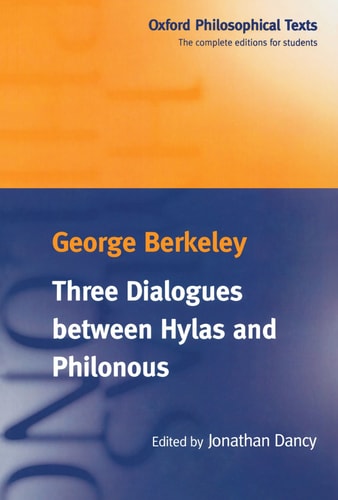
Three Dialogues Between Hylas and Philonous
0
0
As an Amazon Associate and affiliate partner, Menrva Books earns from qualifying purchases. Learn more
Author Description
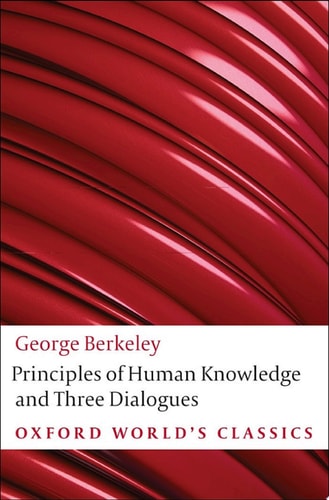
First published in 1713, this work was designed as a vivid and persuasive presentation of the remarkable picture of reality that Berkeley had first presented two years earlier in his Principles. His central claim there, as here, was that the world is not material but mental. Berkeley uses this thesis as the ground for a new argument for the existence of God, and the dialogue form enables him to raise and respond to many of the natural objections to his position. This volume uses the 1734 edition of the text, supplemented by an analysis of the Dialogues and a glossary.
Menrva's Summary
THE THESIS
This work investigates the core ontological question of whether the nature of reality is fundamentally material or mental. George Berkeley, an influential 18th-century philosopher, utilizes the dialogue format to defend his theory of immaterialism, which posits that objects exist only insofar as they are perceived. By engaging in a dialectical exchange between two characters, he addresses common objections to his idealism and constructs a logical framework to support the existence of God as the ultimate perceiver.
THE SCOPE MAP
What You Will Find
- A systematic defense of subjective idealism and the rejection of material substance.
- A structured dialectical methodology using the characters Hylas and Philonous to simulate philosophical debate.
- Analysis of the 1734 edition of the text, providing historical context and linguistic clarification.
- Arguments connecting the perception of the physical world to the necessity of a divine creator.
THE AUTHORITY PERSPECTIVE
Scholars and students of philosophy frequently identify this text as a foundational work for understanding early modern empiricism and the development of idealism. Readers often note the accessibility of the dialogue format, which serves to clarify complex metaphysical arguments that might otherwise remain opaque in a purely treatise-based structure.
Page Count:
192
Publication Date:
1998-05-28
Publisher:
Oxford University Press
ISBN-10:
0198751494
ISBN-13:
9780198751496
Philosophy
Soul
Metaphysics
Idealism
Classical Philosophy
Epistemology
Community Tags
Other Editions(42)
Repro India Limited
2024
Default edition
Repro India Limited
2023

Wilder Publications, Inc
2021
Indoeuropeanpublishing.com
2020
Lulu.com
2020
Lulu Press, Incorporated
2020

Independently Published
2020
Bibliotech Press
2019

CreateSpace Independent Publishing Platform
2018
CreateSpace Independent Publishing Platform
2017
CreateSpace Independent Publishing Platform
2017
CreateSpace Independent Publishing Platform
2017

Barnes & Noble Press
2016

CreateSpace Independent Publishing Platform
2016

CreateSpace Independent Publishing Platform
2016

CreateSpace Independent Publishing Platform
2015
Bibliotech Press
2014
H. Clements
2013
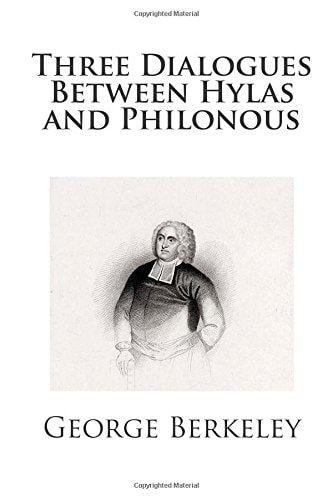
CreateSpace Independent Publishing Platform
2013
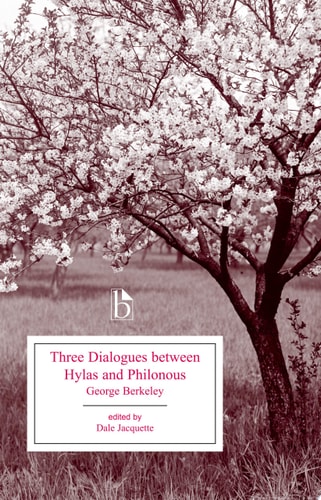
Broadview Press
2012
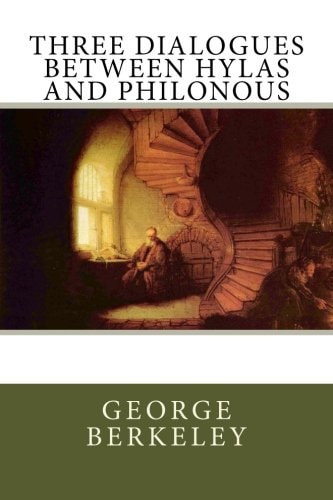
CreateSpace Independent Publishing Platform
2012
Amazon Digital Services LLC - Kdp
2011
CreateSpace Independent Publishing Platform
2011

Bod Third Party Titles
2011
Wilder Publications, Incorporated
2010

IndoEuropeanPublishing.com
2010
HardPress
2010
Standard Publications, Incorporated
2009

Cosimo, Inc.
2008

ReadHowYouWant.com
2008

ReadHowYouWant.com, Limited
2008
IndyPublish.com
2008
Dodo Press
2007

Textbook Publishers
2003

IndyPublish.com
2002
IndyPublish.com
2002
Oxford University Press
1998
Oxford University Press
1998
Prometheus Books, Publishers
1988
Hackett Publishing
1979

Open Court Publishing Company
1977

Alex Catalogue
1900
Similar Books


Reader Comments
Share Your Thoughts
No comments yet. Be the first to share your thoughts!