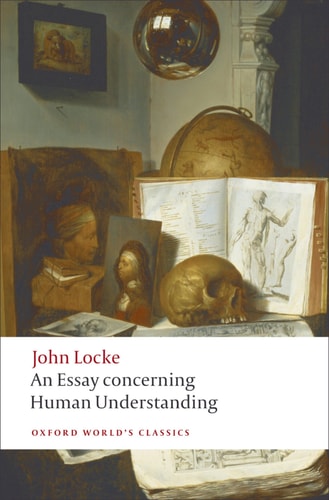
An Essay Concerning Human Understanding
0
0
As an Amazon Associate and affiliate partner, Menrva Books earns from qualifying purchases. Learn more
Author Description
John Locke's classic work An Essay Concerning Human Understanding laid the foundation of British empiricism and remains of enduring interest today. Rejecting doctrines of innate principles and ideas, Locke shows how all our ideas, even the most abstract and complex, are grounded in human experience--attained by sensation of external things or reflection upon our mental activities. A thorough examination of the communication of ideas through language and the convention of taking words as signs of ideas paves the way for his penetrating critique of the limitations of ideas and the extent of our knowledge of ourselves, the world, God and morals. This abridgement, based on P.H. Nidditch's acclaimed critical edition, retains in full all key passages, thus enabling Locke's arguments to be more clearly followed. The new introduction by Pauline Phemister provides valuable background on Locke's essay, illuminating its arguments and conclusions. The book also includes a chronological table of significant events, select bibliography, succinct explanatory notes, and an index--all of which supply additional historical information and aids to navigating the text.About the Series: For over 100 years Oxford World's Classics has made available the broadest spectrum of literature from around the globe. Each affordable volume reflects Oxford's commitment to scholarship, providing the most accurate text plus a wealth of other valuable features, including expert introductions by leading authorities, voluminous notes to clarify the text, up-to-date bibliographies for further study, and much more.
Menrva's Summary
THE THESIS
John Locke investigates the origin, certainty, and extent of human knowledge, ultimately arguing that the mind is a blank slate upon which experience writes. Locke, a foundational figure in Enlightenment philosophy, utilizes a systematic approach to reject the existence of innate ideas. By grounding all human understanding in sensation and reflection, he constructs a framework that defines the boundaries of human cognition and the role of language in representing mental concepts.
THE SCOPE MAP
What You Will Find
- A comprehensive rejection of innate principles and ideas.
- The development of the theory of empiricism through sensation and reflection.
- An analysis of the relationship between language, signs, and the communication of ideas.
- A critical examination of the limitations of human knowledge regarding morality, God, and the physical world.
THE AUTHORITY PERSPECTIVE
Experts recognize this work as a foundational text for modern Western philosophy and the development of empiricism. Readers frequently note the academic density of the prose, though this specific edition is praised for its helpful abridgement and scholarly apparatus that aids in navigating Locke's complex arguments.
Page Count:
520
Publication Date:
2008-10-15
Publisher:
Oxford University Press
ISBN-10:
0199296626
ISBN-13:
9780199296620
Philosophy
Non-Fiction
Classical Philosophy
Empiricism
Epistemology
Knowledge Theory
Community Tags
Other Editions(51)
Creative Media Partners, LLC
2022
Default edition
Independently Published
2020
Independently Published
2020

HardPress
2020
HardPress
2020
HardPress
2019
HardPress
2019
HardPress
2019

HardPress
2019

HardPress
2019
HardPress
2019
HardPress
2019

Digireads.com Publishing
2019

Creative Media Partners, LLC
2019
CreateSpace Independent Publishing Platform
2018

CreateSpace Independent Publishing Platform
2017

CreateSpace Independent Publishing Platform
2017

CreateSpace Independent Publishing Platform
2016
CreateSpace Independent Publishing Platform
2016
Creative Media Partners, LLC
2015
Creative Media Partners, LLC
2015
BiblioBazaar
2015
BiblioBazaar
2015
BiblioBazaar
2015

CreateSpace Independent Publishing Platform
2015

Wordsworth Editions
2014
Clarendon Press
2013

CreateSpace Independent Publishing Platform
2013

Read Books Ltd.
2013
HardPress
2013
Oxford University Press
2008
Digireads.com
2008

ReadHowYouWant.com, Limited
2007

Barnes & Noble Publishing
2004

N/A
2003

Adamant Media Corporation
2000

Wordsworth Editions
1998

Hackett Publishing
1996
Hackett Publishing Company
1996

Oxford University Press, Incorporated
1994

Oxford University Press
1994

Dent
1993
J m Dent & Sons Limited
1980
Harvester Press
1978
Clarendon Press
1975

Penguin Publishing Group
1974

New American Library
1974

Dent
1972
Oxford University Press
1924

Ward, Lock
1900

Alex Catalogue
1900
Similar Books


Reader Comments
Share Your Thoughts
No comments yet. Be the first to share your thoughts!