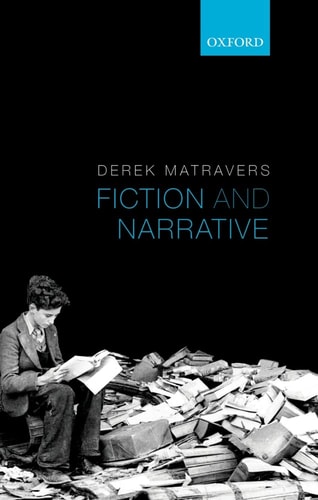
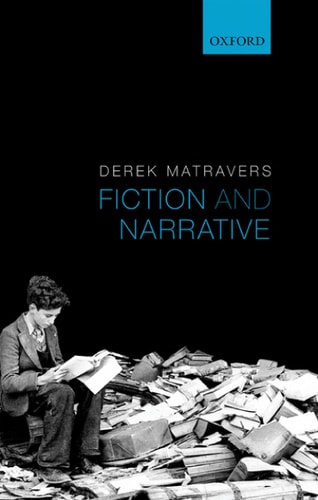
Fiction and Narrative
0
0
As an Amazon Associate and affiliate partner, Menrva Books earns from qualifying purchases. Learn more
Author Description
For the past twenty years there has been a virtual consensus in philosophy that there is a special link between fiction and the imagination. In particular, fiction has been defined in terms of the imagination: what it is for something to be fictional is that there is some requirement that a reader imagine it. Derek Matravers argues that this rests on a mistake; the proffered definitions of 'the imagination' do not link it with fiction but with representations more generally. In place of the flawed consensus, he offers an account of what it is to read, listen to, or watch a narrative whether that narrative is fictional or non-fictional. The view that emerges, which draws extensively on work in psychology, downgrades the divide between fiction and non-fiction and largely dispenses with the imagination. In the process, he casts new light on a succession of issues: on the 'paradox of fiction', on the issue of fictional narrators, on the problem of 'imaginative resistance', and on the nature of our engagement with film.
Menrva's Summary
THE THESIS
Does the conventional philosophical link between fiction and the imagination hold up under rigorous scrutiny? Derek Matravers, a philosopher specializing in aesthetics and the philosophy of mind, challenges the long-standing consensus that defines fiction primarily through the reader's imaginative engagement. By integrating psychological research with philosophical analysis, he argues that the traditional divide between fictional and non-fictional narratives is overstated and proposes an alternative framework for understanding how audiences engage with all forms of storytelling.
THE SCOPE MAP
What You Will Find
- A critical evaluation of the 'imagination' as a defining criterion for fiction.
- An interdisciplinary framework drawing on cognitive psychology and narrative theory.
- Analysis of the 'paradox of fiction' and the problem of 'imaginative resistance'.
- A unified theory of engagement that applies to both written texts and film.
THE AUTHORITY PERSPECTIVE
Scholars and philosophers frequently cite this work as a significant challenge to established aesthetic theories regarding narrative engagement. The text is noted for its dense, analytical prose that requires a foundational understanding of contemporary philosophy of mind.
Page Count:
192
Publication Date:
2017-04-24
Publisher:
Oxford University Press
ISBN-10:
0198776608
ISBN-13:
9780198776604
Philosophy
Psychology
Aesthetics
Imagination
Narratology
Literary theory
Discourse Analysis
Community Tags
Other Editions(4)
Similar Books