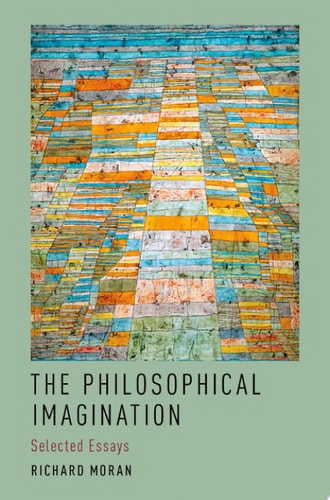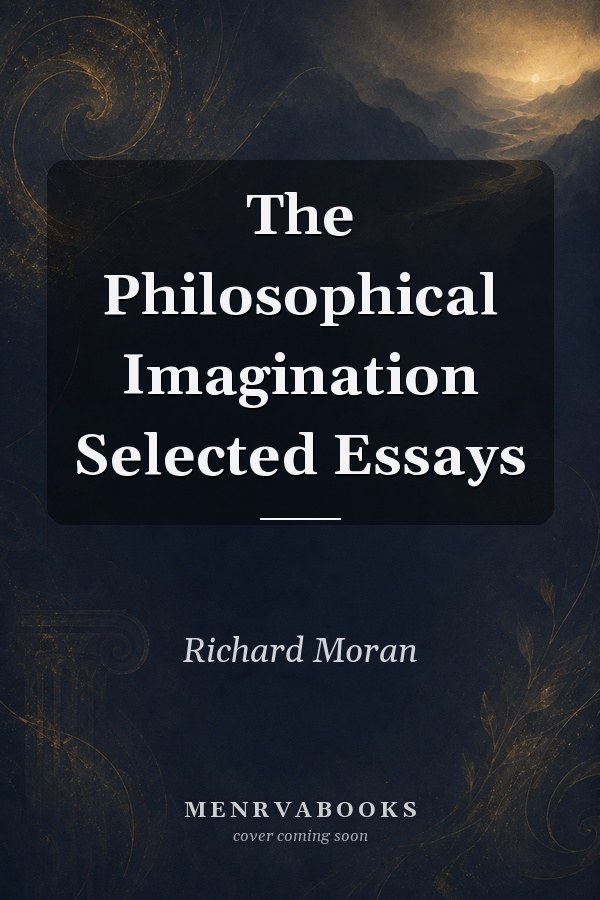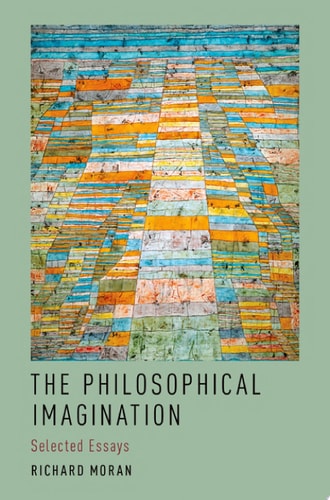
The Philosophical Imagination: Selected Essays
0
0
As an Amazon Associate and affiliate partner, Menrva Books earns from qualifying purchases. Learn more
Author Description
The Philosophical Imagination brings together several of Richard Moran's essays, ranging over a remarkable variety of topics in philosophy of mind and action, aesthetics, and moral psychology. A theme connecting several of the essays is the different ways our capacity for imagination is drawn on in our responsiveness to art, to literature, to the lives of other persons, and in the practice of philosophy itself. Topics explored here include our emotional responses to mimetic works of art, the nature of metaphor as a vehicle of thought and in the work of rhetoric, and the understanding of the concept of beauty, as that is developed in contrasting ways in the work of Immanuel Kant and Marcel Proust. Several of the essays respond to the work of recent and contemporary philosophers such as Bernard Williams, Stanley Cavell, Harry Frankfurt, and Iris Murdoch, in the context of such themes as the philosophical problem of 'other minds', love and practical reason, the legacy of Sartrean existentialism, and the role of history in the disciplinary self-understanding of philosophy. The final group of essays focuses on questions about self-knowledge and the importance of the first-person perspective, developing ideas from Moran's influential book Authority and Estrangement (Princeton 2001). Topics discussed here include the nature of a person's 'practical knowledge' of her own action, the concept of the mental and the differences between self-understanding and the understanding of others, and the ambiguous role of narrative as a form of self-understanding. Throughout there is an attempt to draw out the connections between topics that are often discussed in isolation from each other, and to pursue them in the context of the recognizable human situations and questions which ground them. The essays are written in a vivid, humane, and accessible style which should attract a broad readership, both inside and outside the academic discipline of philosophy.
Menrva's Summary
THE THESIS
This collection investigates how the human capacity for imagination functions as a central mechanism in our engagement with art, literature, interpersonal relationships, and philosophical inquiry. Richard Moran, a professor of philosophy, synthesizes his research across multiple domains to argue that imagination is not merely a decorative faculty but a foundational component of practical reason and self-knowledge. By examining the intersection of aesthetics and moral psychology, the author provides a framework for understanding how we interpret both the internal mental states of others and the external reality of our own actions.
THE SCOPE MAP
What You Will Find
- Analyses of emotional responses to mimetic art and the function of metaphor in rhetoric.
- Comparative studies of beauty in the works of Immanuel Kant and Marcel Proust.
- Critiques and extensions of philosophical thought from Bernard Williams, Stanley Cavell, Harry Frankfurt, and Iris Murdoch.
- Explorations of self-knowledge, the first-person perspective, and the role of narrative in identity.
Scope Limits
- The text does not provide a comprehensive history of Western philosophy.
- It does not offer a systematic manual for psychological therapy or self-help.
THE AUTHORITY PERSPECTIVE
Scholars and students of philosophy frequently identify this collection as a significant extension of Moran's earlier work on self-knowledge and agency. Readers often note the clarity and accessibility of the prose, which bridges the gap between specialized academic discourse and broader humanistic inquiry.
Page Count:
342
Publication Date:
2017-01-01
Publisher:
Oxford University Press
ISBN-10:
0190633794
ISBN-13:
9780190633790
Philosophy
Mind & Body
Imagination
Philosophy of
Essays
Aesthetics