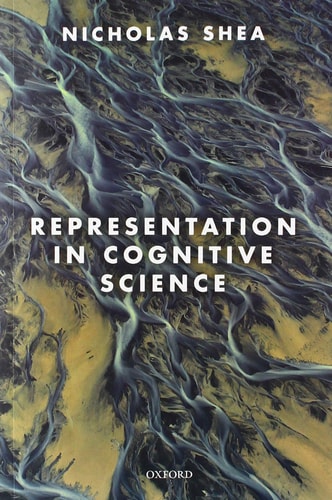
Representation in Cognitive Science
0
0
As an Amazon Associate and affiliate partner, Menrva Books earns from qualifying purchases. Learn more
Author Description
Our thoughts are meaningful. We think about things in the outside world; how can that be so? This is one of the deepest questions in contemporary philosophy. Ever since the 'cognitive revolution', states with meaning-mental representations have been the key explanatory construct of the cognitive sciences. But there is still no widely accepted theory of how mental representations get their meaning. Powerful new methods in cognitive neuroscience can now reveal information processing in unprecedented detail. They show how the brain performs complicated calculations on neural representations.Drawing on this cutting-edge research, Nicholas Shea uses a series of case studies from the cognitive sciences to develop a naturalistic account of the nature of mental representation. His approach is distinctive in focusing firmly on the 'subpersonal' representations that pervade so much of cognitive science. The diversity and depth of the case studies, illustrated by numerous figures, make this book quite unlike any previous treatment. It is important reading for philosophers of psychology and philosophers of mind, and of considerable interest to researchers throughout the cognitive sciences.
Menrva's Summary
THE THESIS
How do mental states acquire meaning and represent the external world within the framework of cognitive science? Nicholas Shea, a philosopher of mind, addresses this fundamental problem by synthesizing contemporary cognitive neuroscience with philosophical inquiry. He proposes a naturalistic account of mental representation, specifically focusing on subpersonal states that facilitate information processing in the brain.
THE SCOPE MAP
What You Will Find
- A naturalistic theory of mental representation grounded in subpersonal cognitive processes.
- Analysis of information processing mechanisms within neural architectures.
- A series of detailed case studies drawn from current cognitive neuroscience research.
- Theoretical integration of philosophical concepts with empirical data from brain science.
THE AUTHORITY PERSPECTIVE
Experts recognize this work as a significant contribution to the philosophy of mind and cognitive science, particularly for its focus on subpersonal representations. Readers frequently note the academic density of the prose, which requires a strong background in philosophy or neuroscience to fully synthesize the author's arguments.
Page Count:
304
Publication Date:
2020-12-08
Publisher:
Oxford University Press
ISBN-10:
019886695X
ISBN-13:
9780198866954
Philosophy
Politics
Science
Psychology
Neuroscience
Philosophy history
Cognitive
Consciousness & Thought
New Used & Rental Textbooks
Community Tags
Other Editions(5)



Similar Books










Reader Comments
Share Your Thoughts
No comments yet. Be the first to share your thoughts!