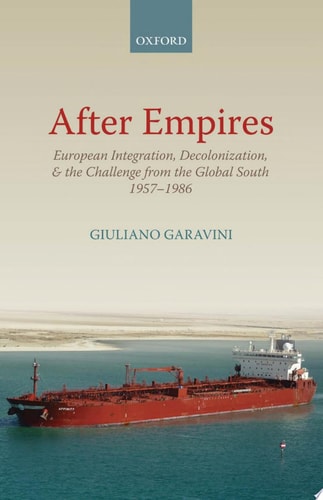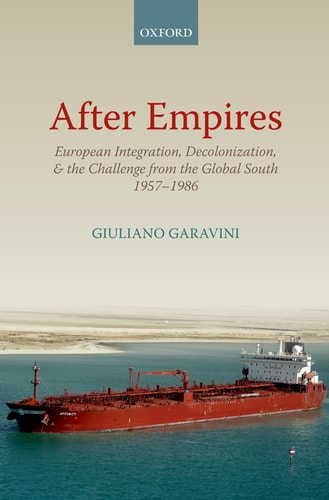
After Empires: European Integration, Decolonization, and the Challenge from the Global South 1957-1986
0
0
As an Amazon Associate and affiliate partner, Menrva Books earns from qualifying purchases. Learn more
Author Description
After Empires describes how the end of colonial empires and the changes in international politics and economies after decolonization affected the European integration process. Until now, studies on European integration have often focussed on the search for peaceful relations among the European nations, particularly between Germany and France, or examined it as an offspring of the Cold War, moving together with the ups and downs of transatlantic relations. But these two factors alone are not enough to explain the rise of the European Community and its more recent transformation into the European Union.Giuliano Garavini focuses instead on the emergence of the Third World as an international actor, starting from its initial economic cooperation with the creation of the United Nations Conference for Trade and Development (UNCTAD) in 1964 up to the end of unity among the countries of the Global South after the second oil shock in 1979-80. Offering a new - less myopic - way to conceptualise European history more globally, the study is based on a variety of international archives (government archives in Europe, the US, Algeria, Venezuela; international organizations such as the EC, UNCTAD, and the World Bank; political and social organizations such as the Socialist International, labour archives and the papers of oil companies) and traces the reactions and the initiatives of the countries of the European Community, but also of the European political parties and public opinion, to the rise and fall of the Third World on the international stage.
Menrva's Summary
THE THESIS
This work investigates how the collapse of colonial empires and the subsequent rise of the Global South as an international actor fundamentally shaped the trajectory of European integration between 1957 and 1986. Giuliano Garavini, drawing on extensive archival research from Europe, the United States, and various Global South nations, argues that traditional narratives focusing solely on Franco-German relations or Cold War dynamics are insufficient. By examining the economic and political pressures exerted by the Third World, the author provides a comprehensive framework that situates the development of the European Community within a broader, global context.
THE SCOPE MAP
What You Will Find
- Analysis of the impact of the United Nations Conference for Trade and Development (UNCTAD) on European economic policy.
- Examination of the geopolitical shifts following the 1979-80 oil shocks and the subsequent fragmentation of the Global South.
- Utilization of primary source materials from government archives, international organizations like the World Bank, and private oil company records.
- A detailed study of how European political parties and public opinion responded to the changing international status of former colonies.
THE AUTHORITY PERSPECTIVE
Scholars and historians frequently cite this text as a necessary expansion of the historiography surrounding European integration. Readers often note the academic density of the prose and the rigorous archival methodology employed to challenge conventional Eurocentric narratives.
Page Count:
304
Publication Date:
2021-04-25
Publisher:
Oxford University Press
ISBN-10:
0198867719
ISBN-13:
9780198867715
Economics
History
Economic History
European History
International relations
Decolonization