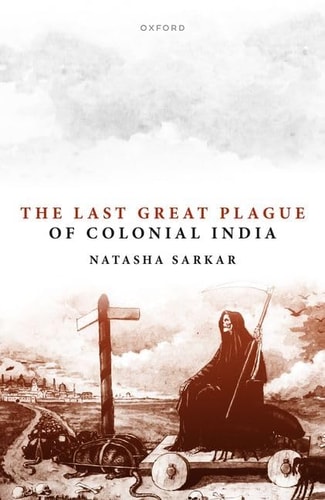
The Last Great Plague of Colonial India
0
0
As an Amazon Associate and affiliate partner, Menrva Books earns from qualifying purchases. Learn more
Author Description
Plague has attained pandemic proportions on three occasions in recorded history. It is within the context of the third, modern pandemic that this book unfolds: an outbreak which took over twelve million lives in India alone.Natasha Sarkar examines for the first time the full social history of this extraordinary medical crisis in India at the end of the nineteenth century, detailing the nature and progress of the disease within a complex colonial environment. Deep-seated colonial anxieties about governing India influenced and are disclosed in responses to the pandemic. Disease carriers were identified and labelled, and scapegoats stigmatized. Western Imperialism and its developments in biomedicine clashed with older indigenous medical systems.Sarkar also considers attitudes, approaches, and mentalities in indigenous Indian society. She explores what individuals and communities made of the disease, and how social prejudices surrounding it and its sufferers became increasingly heightened in a colonial environment. The plague crisis reveals disparate, heterogeneous voices across communities--the contradictions of a multi-religious, multi-lingual, and multi-cultural society. The last great plague of Colonial India is thus portrayed in all its political, social, economic, and demographic dimensions.
Menrva's Summary
THE THESIS
This book investigates the social, political, and demographic impact of the third plague pandemic on late nineteenth-century colonial India. Natasha Sarkar utilizes historical records to analyze how the intersection of Western biomedical imperialism and indigenous medical systems shaped the response to a crisis that claimed twelve million lives. The work argues that colonial anxieties and governance strategies directly influenced the stigmatization of disease carriers and the broader social reaction to the outbreak.
THE SCOPE MAP
What You Will Find
- A comprehensive social history of the third plague pandemic in India during the late 1800s.
- Analysis of the conflict between Western biomedical practices and traditional indigenous medical systems.
- Examination of colonial administrative responses and the resulting social stigmatization of specific groups.
- Exploration of diverse community perspectives, including the multi-religious and multi-cultural reactions to the disease.
THE AUTHORITY PERSPECTIVE
Historians and scholars of colonial medicine recognize this work as a significant contribution to the understanding of public health crises under imperial rule. The text is noted for its ability to synthesize complex demographic data with nuanced cultural analysis of the period.
Page Count:
256
Publication Date:
2024-01-01
Publisher:
Oxford University Press
ISBN-10:
0198873220
ISBN-13:
9780198873228
History
Politics
Sociology
MEDICAL History
Colonial History
Epidemiology
Specific Topics
India
Educational Resources
Community Tags
Other Editions(2)
Similar Books