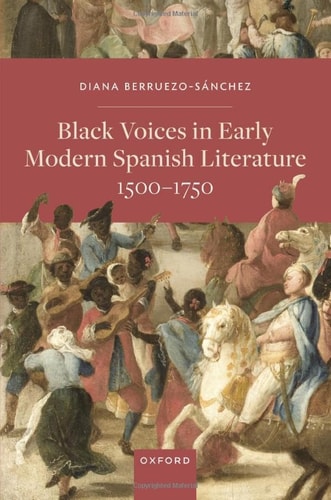
Black Voices in Early Modern Spanish Literature: 1500-1750
0
0
As an Amazon Associate and affiliate partner, Menrva Books earns from qualifying purchases. Learn more
Author Description
In this groundbreaking study, Diana Berruezo-Sánchez recovers key chapters in the history of Afro-Iberian diasporas by exploring the literary contributions and life experiences of black African communities and individuals in early modern Spain. From the sixteenth to the eighteenth centuries, international trade involving chattel slavery led to significant populations of enslaved, free(d), and half-manumitted black African women, men, and children in the Iberian Peninsula. These demographic changes transformed Spain's urban and social landscapes.In exploring Spain's role in the transatlantic slave trade and its effects on cultural forms of the period, Berruezo-Sánchez examines a broad range of texts and unearths new documents relating to black African poets, performers, and black confraternities. Her discoveries evince the broad yet largely disregarded literary and artistic impact of the African diaspora in early modern Spain, expanding the scope of linguistic practices beyond habla de negros and creating space for early modern black poets in the Spanish literary canon.These textual sources challenge established understandings of black Africans and black African history in early modern Spain. They show how black Africans exerted significant cultural agency by collectively contributing to and shaping the literary texts of the period, including those of the popular genre villancicos de negros, and by developing artistic traditions as musicians, dancers, and poets. As both creators and consumers of cultural forms, black African men and women navigated a restrictive, coercive slave society yet negotiated their own physical and cultural spaces.
Menrva's Summary
THE THESIS
This study investigates the historical and cultural contributions of black African individuals to the literary and social landscape of early modern Spain between 1500 and 1750. Diana Berruezo-Sánchez, a scholar specializing in early modern Iberian studies, utilizes archival research and textual analysis to challenge traditional narratives regarding the African diaspora in the Iberian Peninsula. By examining primary documents, poetry, and performance records, the author argues that black Africans were active agents in shaping the cultural and artistic identity of the period rather than passive subjects of a slave society.
THE SCOPE MAP
What You Will Find
- Analysis of the demographic shifts caused by the transatlantic slave trade in urban Spanish centers.
- Examination of the literary genre known as villancicos de negros.
- Investigation into the roles of black African poets, musicians, and dancers within the Spanish canon.
- Evidence derived from newly unearthed archival documents and historical texts.
THE AUTHORITY PERSPECTIVE
Scholars in the field of early modern studies recognize this work as a significant contribution to the recovery of marginalized voices in Spanish history. The text is noted for its rigorous archival approach and its ability to reframe the cultural agency of the African diaspora within a restrictive social framework.
Page Count:
336
Publication Date:
2024-12-05
Publisher:
Oxford University Press
ISBN-10:
0198914229
ISBN-13:
9780198914228
History
Politics
Ethnic Studies
Criticism & Theory
Literary Criticism
Spanish literature
Community Tags
Similar Books